Nomioides minutissimus is one of the smallest bees found in central Europe. And currently my favourite one 🙂
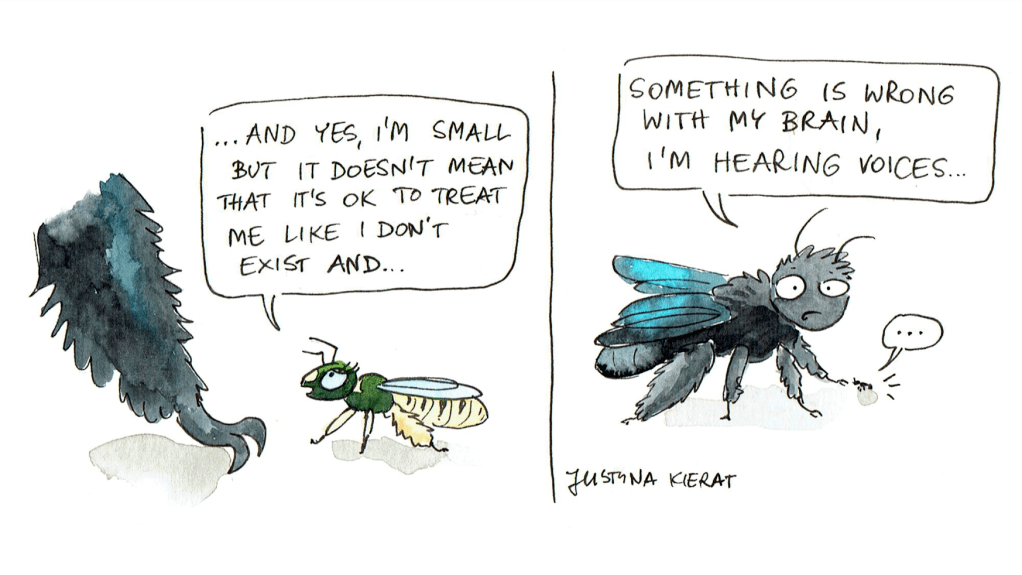
Nomioides minutissimus is one of the smallest bees found in central Europe. And currently my favourite one 🙂
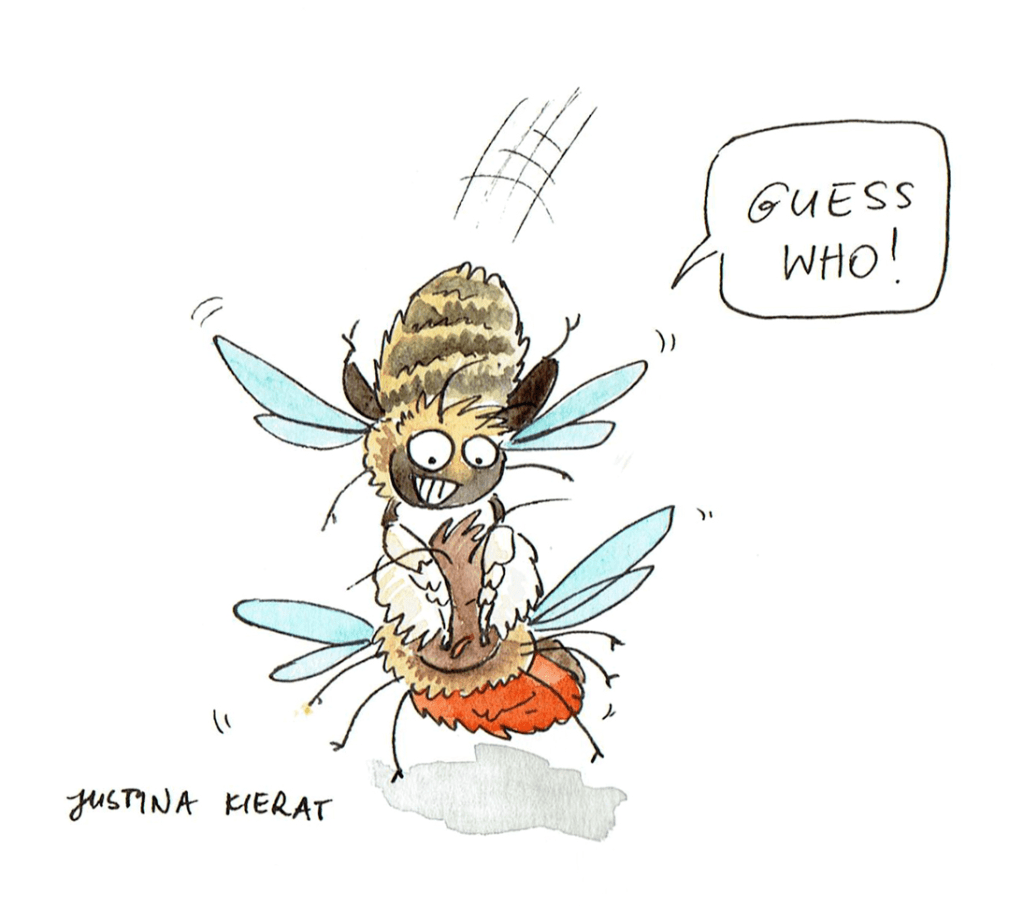
In some species of bees males have expanded fore tarsi, shaped so that they can serve as blindfolds. Their use as such is important part of courtship. Interestingly, expanded forelegs which are used in mating can be found in some distantly related bee species, like in some species of Megachile and Xylocopa, and also in some digger wasps.
Bees from the genus Heriades have a very particular way to collect pollen – they repeatedly hit the surface of a flower with their scopa.

Sleeping bees have always fascinated me. Females usually spend nights inside their nests (unless they are cuckoo bees and don’t have one), but males look for various sleeping places. In some species, they like spending the night in a sleeping aggregation of a few (or sometimes quite many) individuals, gathered on a plant stem or inflorescence. They are in plain sight and it’s uncertain what advantages this behaviour has.

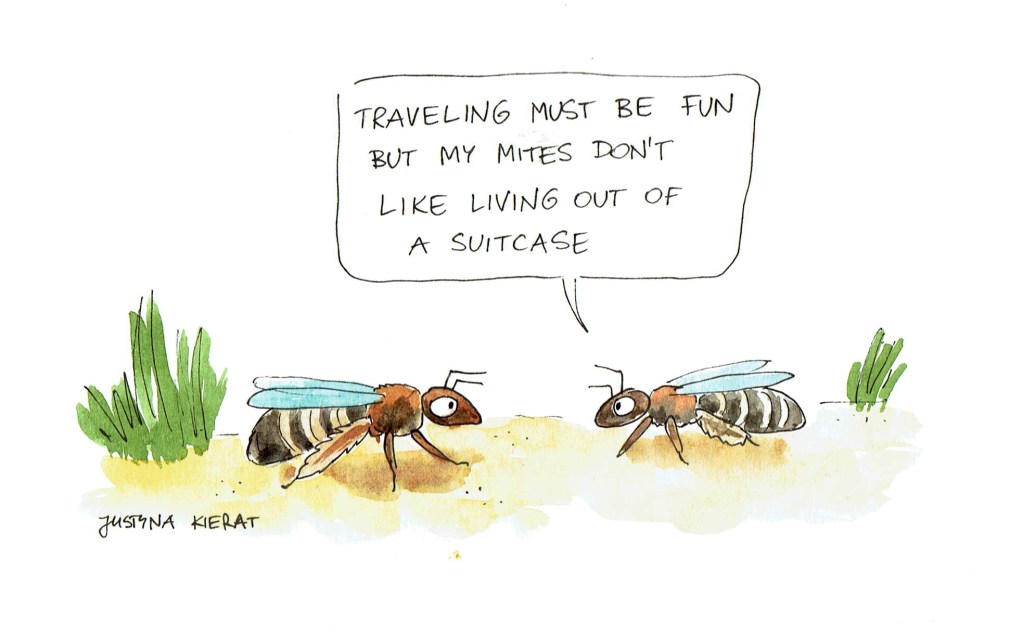
Halictus scabiosae and H. sexcinctus are two related species, and quite similar in appearance. There are two particular differences, among others, between them*. First, H. sexcinctus (but not scabiosae) females have acarinarium on their first tergite, which is a cozy place for mites of a specific species, Anoetus halicticola. Second, H. scabiosae increases its range quite fast in recent decades. In Poland this species was first observed in 2020, and a few days ago we published a short note about its further dispersal. It travels fast!
*I don’t know about causal relationship between presence of acarinarium and dispersal, don’t treat the cartoon scenario too seriously 🙂
Some bees don’t emerge from their natal nests the next season. Especially in case of desert species, they can skip a year… or several years. As Danforth et al. mention in “The Solitary Bees”, Rozen once kept prepupae of Pararhophites in his desk drawer for five years! And it was not even the record because Amegilla dawsoni can wait for ten years for emergence.

There is great paper by Andreas Muller in Alpine Entomology published this year, about food preferences of Hylaeus. Members of this genus were believed to be polylectic, with a few exceptions. As it turned out, many of them are in fact specialized or at least have marked preferences for certain types of pollen.

Do you remember that amazing photo by Karine Aigner, the winner of Wildlife Photographer of the Year competition in 2022? Here’s how it was made (at least I think so!  )
)

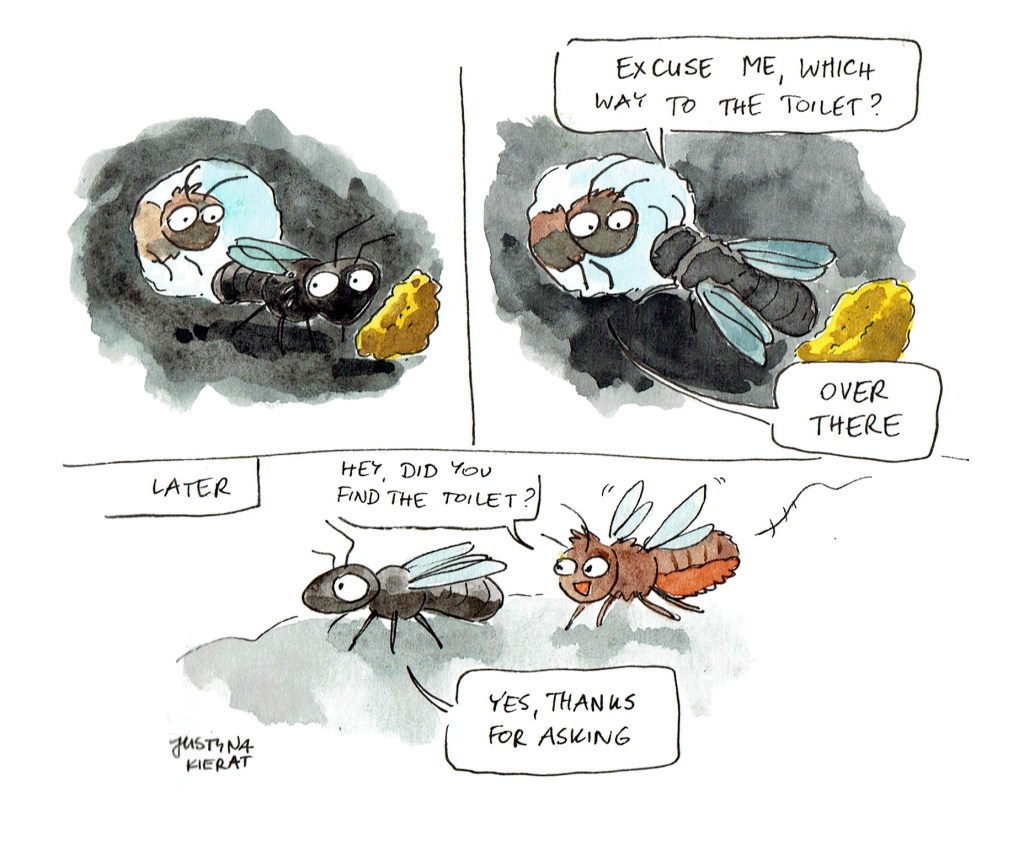
Cuckoo bees don’t build their own nests but lay their eggs in other bees’ nest cells. Some bees aggresively chase their cuckoos but others seem not to care. Rust and Thorp studied Stelis chlorocyanea and Osmia nigrifrons and concluded that Osmia reportedly don’t care about their parasite. If Stelis is discovered by the host inside the nest, it simply backs out and goes its way, and both species can be observed resting peacefully next to each other. Why is that?
I read the abovementioned story, which was inspiration to the cartoon, in the review paper by Jessica Litmann entitled “Under the radar: detection avoidance in brood parasitic bees”. And if you want to read more plausible hypotheses explaining the described phenomenon than this proposed on my cartoon, I strongly recommend this paper!  I didn’t manage to find good photos of neither of the species described, so the characters probably don’t resemble the bees from the original research. But I’m pretty sure that they are not the only host-cuckoo pair which lives peacefully next to each other.


 Non-honey bees