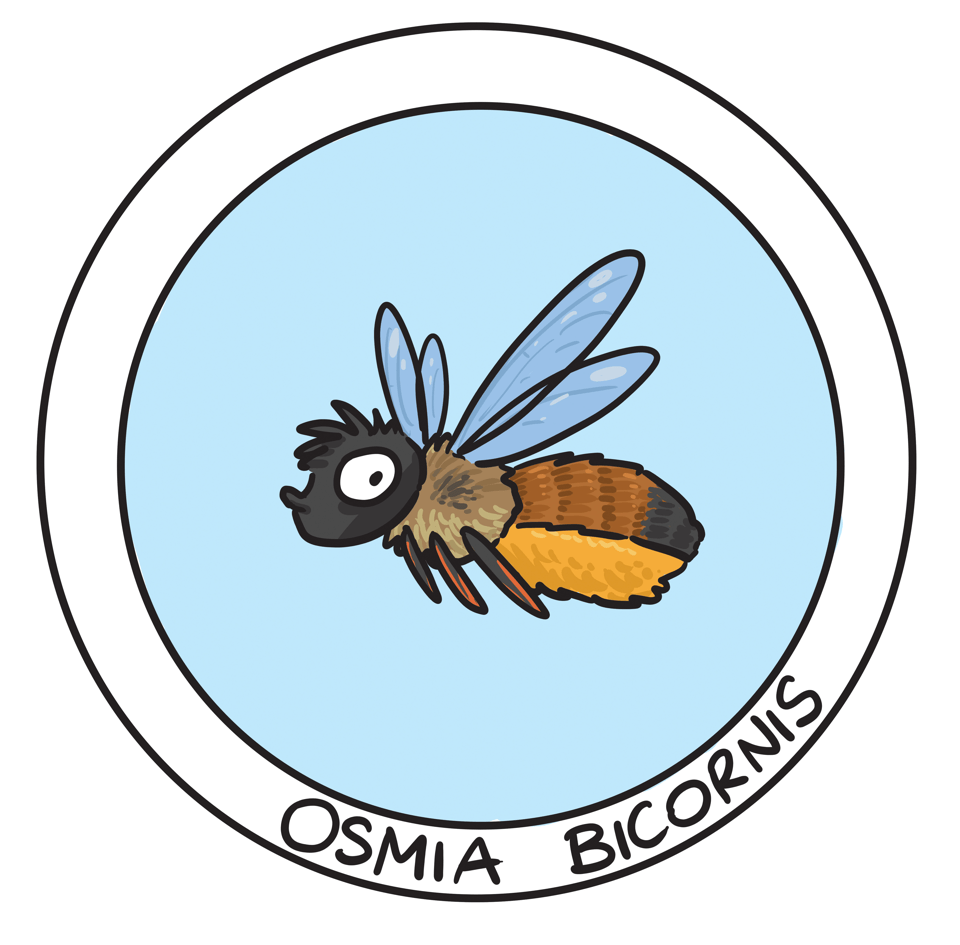
You liked my last post with bee portraits, so here are a few more – enjoy!
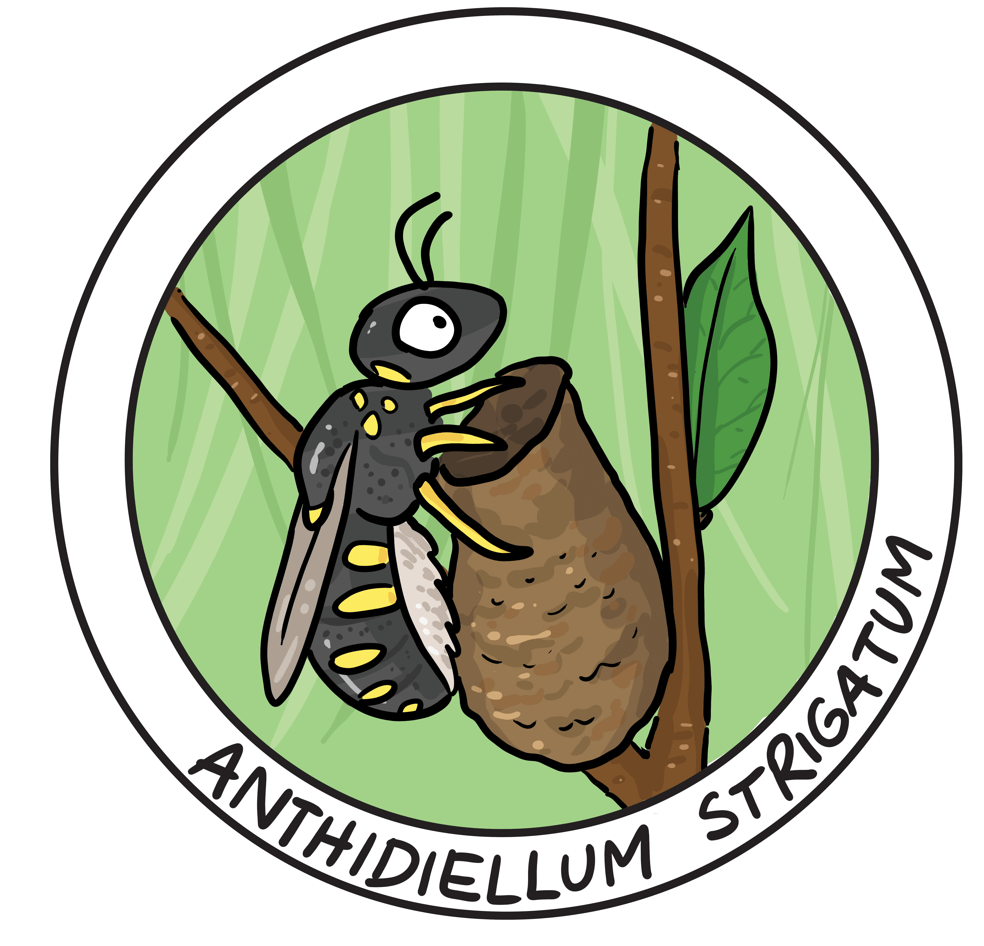
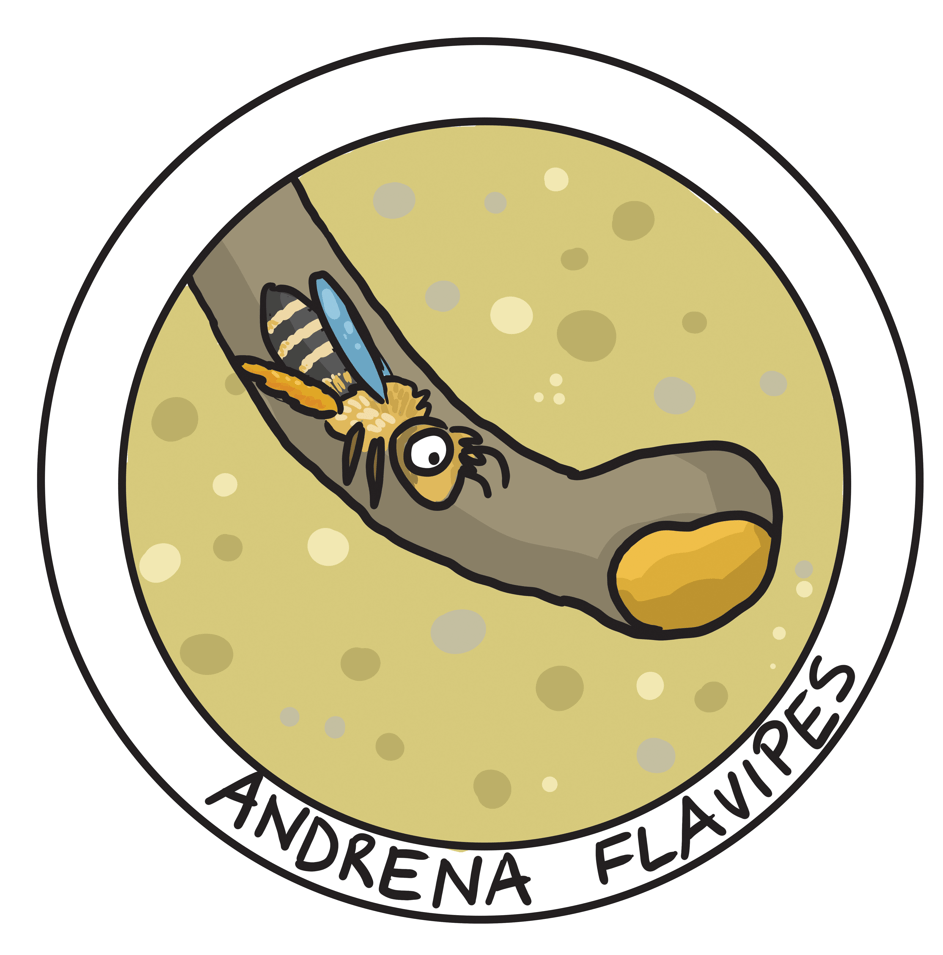
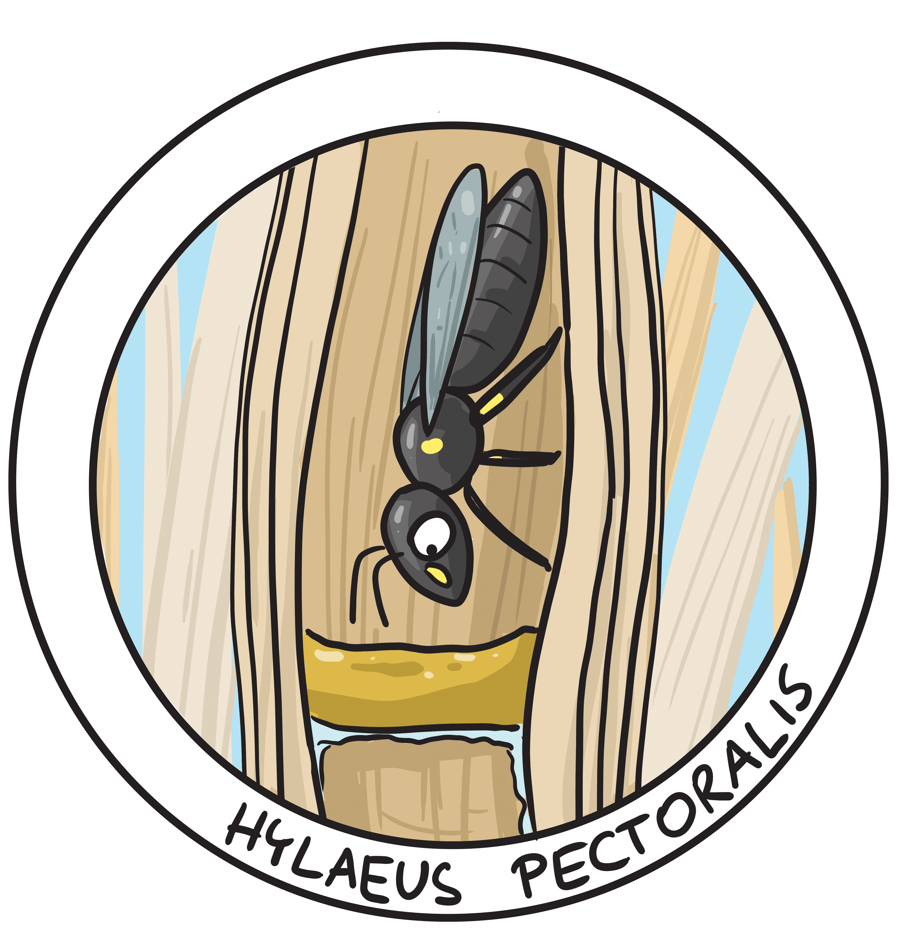
Today’s cartoon was inspired by a recent paper I co-authored. Its main character is a rare Megachile species. I had a pleasure to watch females carrying leaf pieces. Most of Megachile species in my region cut circular leaf fragments and use them to line their nests (hence their common name – leafcutter bees). If you see a plant with numerous regular holes along the leaf edges, you can tell a Megachile female was there. I remember seeing a post on social media where a lady complained that the bees cut almost all leaves of her favourite rose. I know quite a few people who would happily allow the bees take all the plants from their garden. Usually, however, leafcutter bees don’t cause any obvious damage, and live in our gardens unnoticed by most.

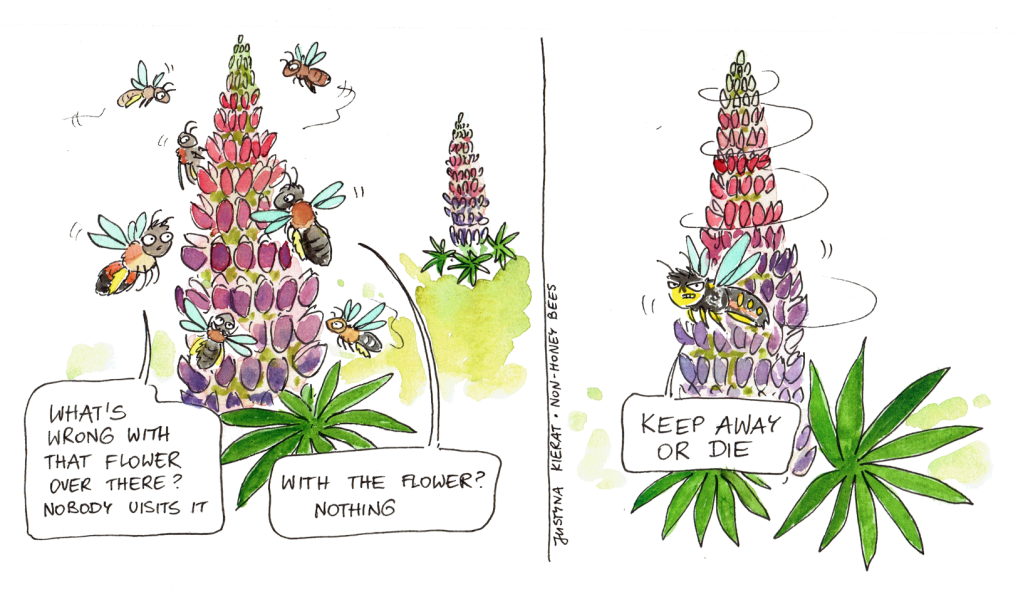
Last week, I was observing bees in a garden. Among other plants, there were two flowers, looking more or less the same to me. One was visited by quite many bees, and the other was abandoned. After a moment, I saw a male bee zooming around it. Maybe it was a coincidence, but males of some bee species are well known for their aggressive defence of their territory. Maybe the other bees just didn’t want trouble.
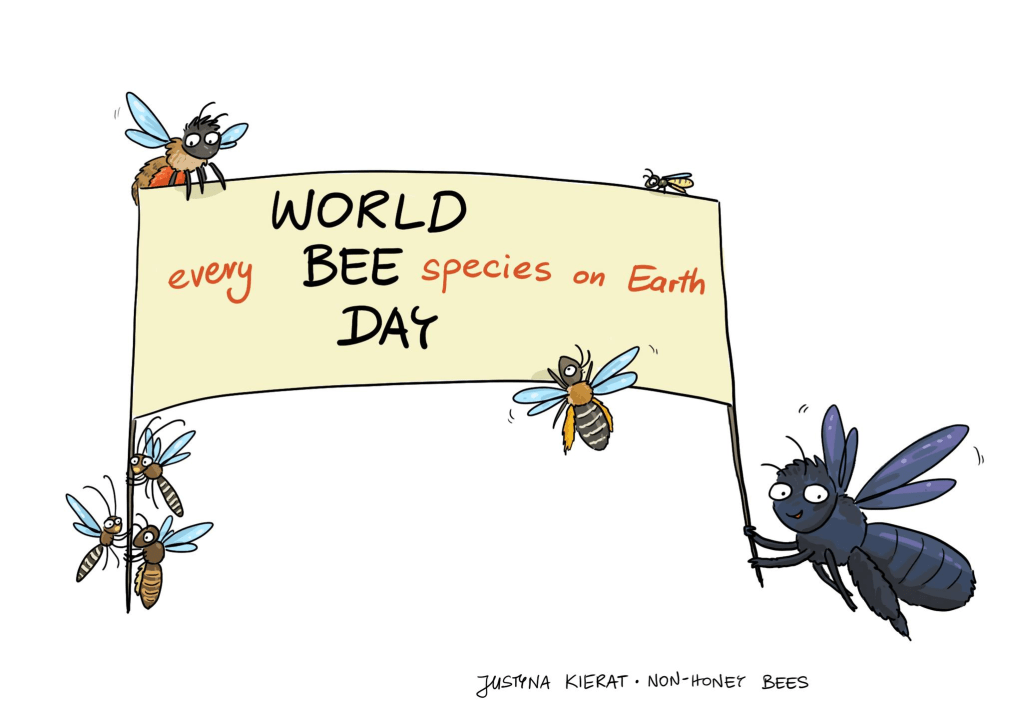
Today is a special day! Best wishes to all bees and bee lovers!
Would you like to give something to non-honey bees on this occasion? You’ll probably see lots of posts featuring the managed honeybees as the only species celebrating today. Leave comments informing people about all the non-honey rest!
I’d like to show you what I drew lately. It’s not a comic but there are cartoon bees on it. Let me know if you’d like to see more such drawings. I have some on my computer, and plans for drawing more in the future.
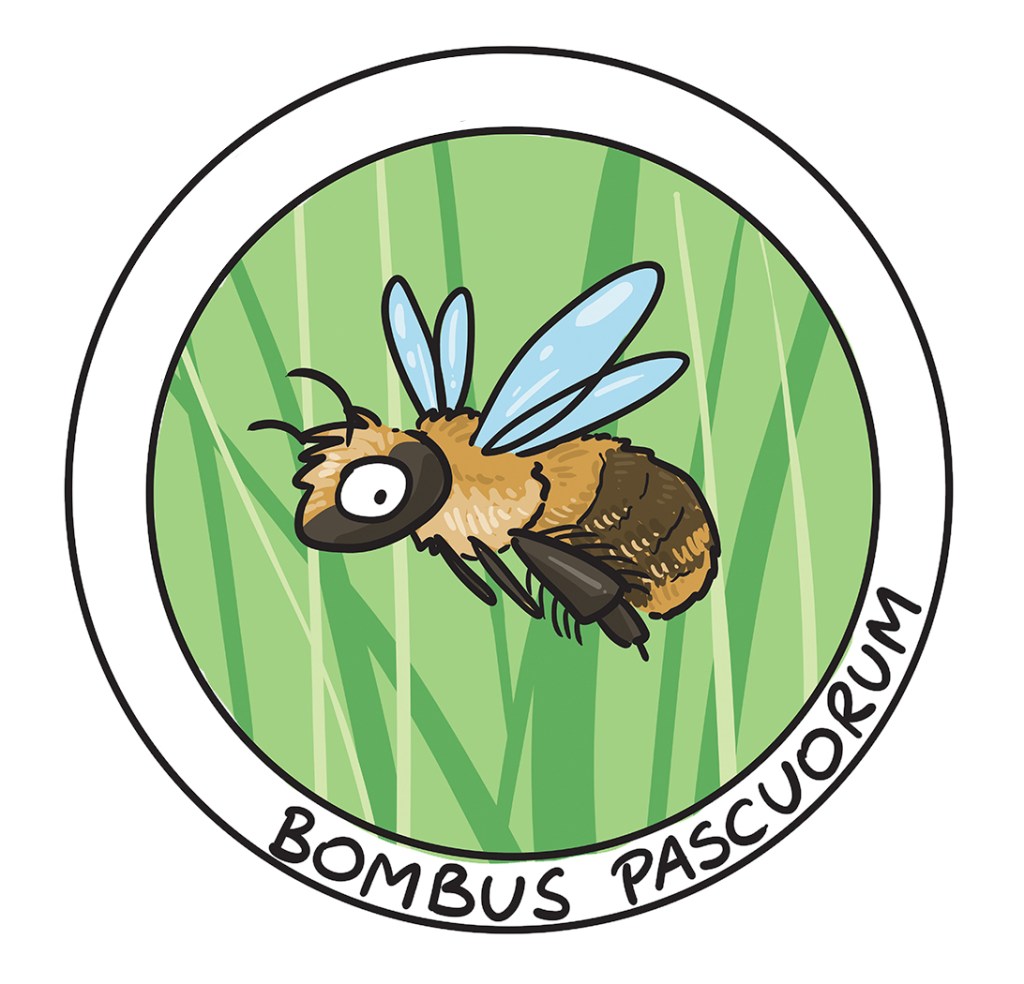
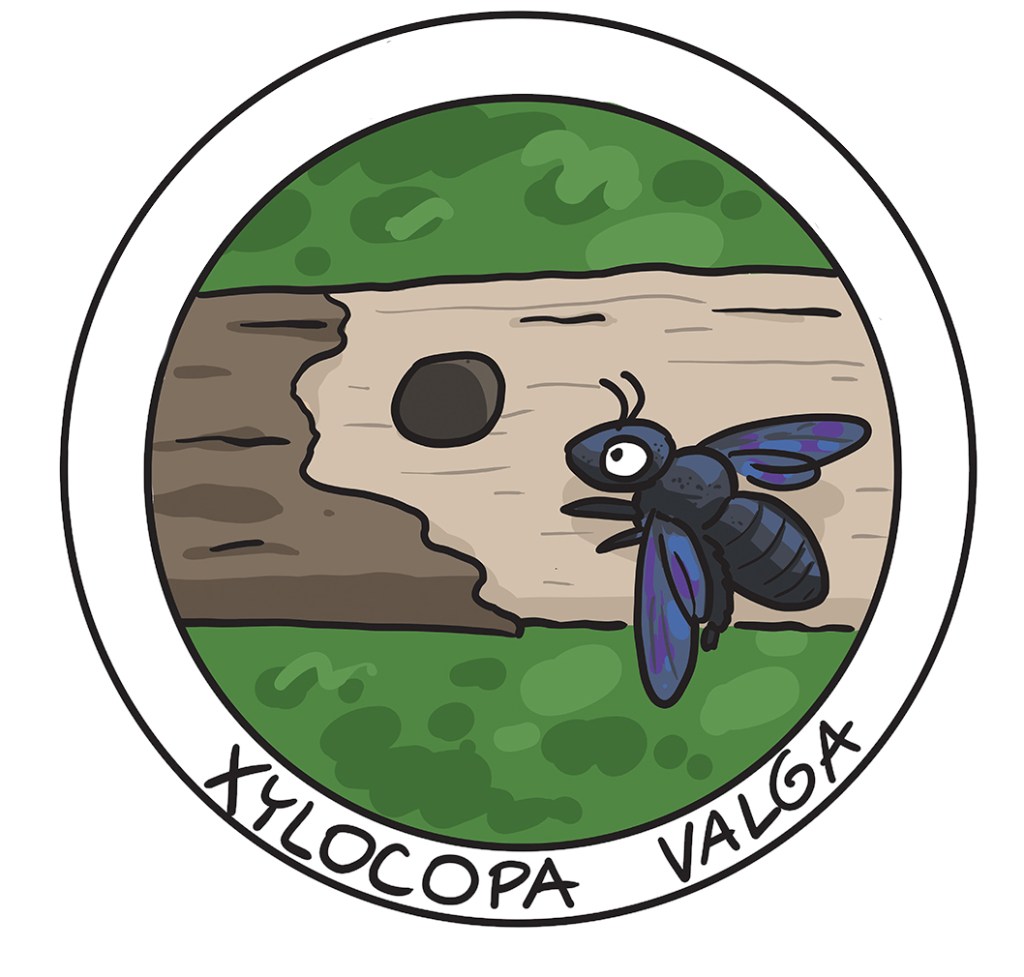
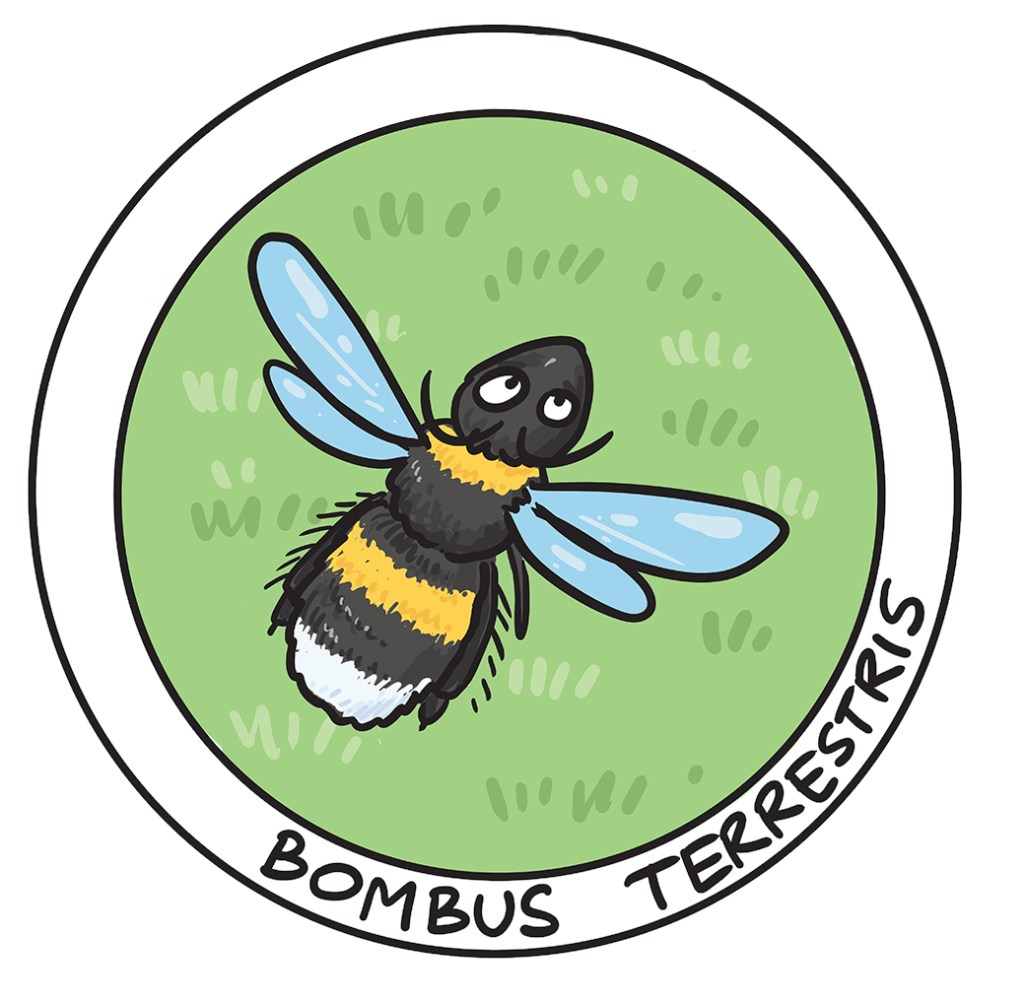
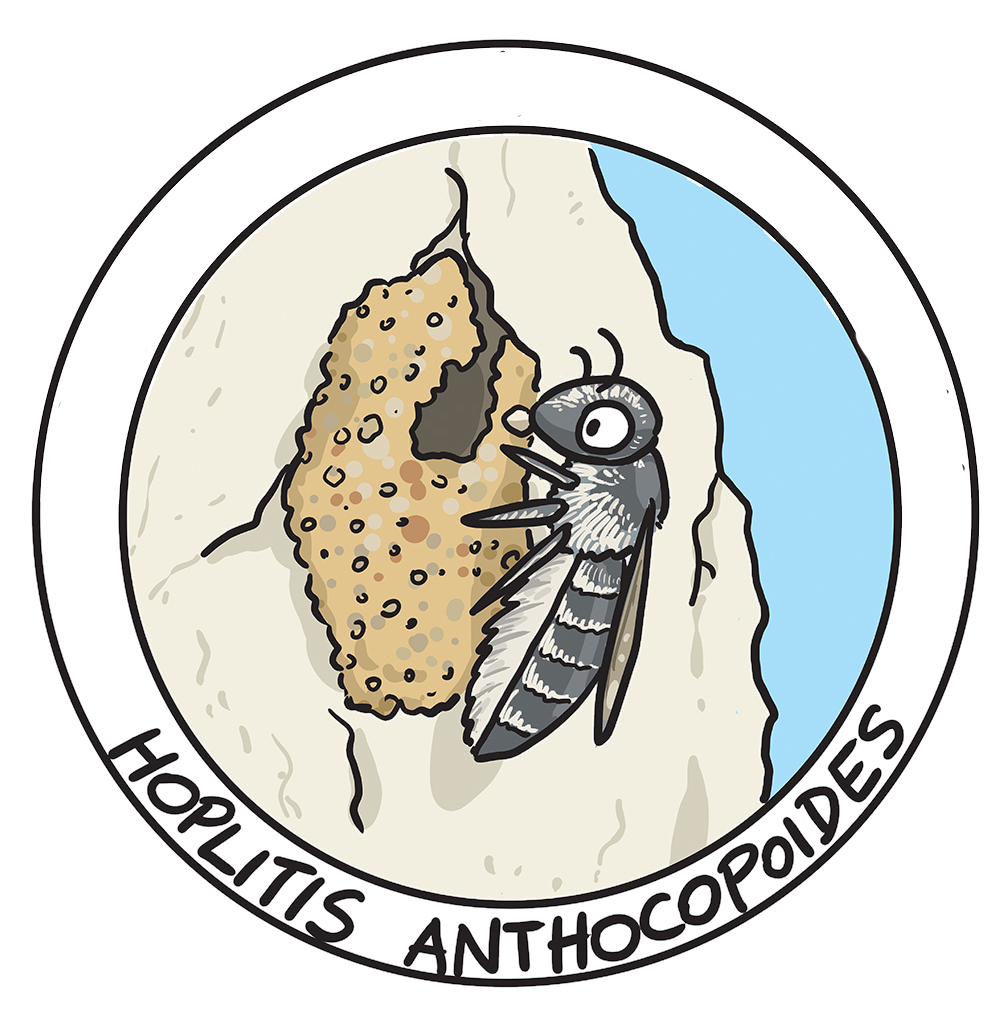
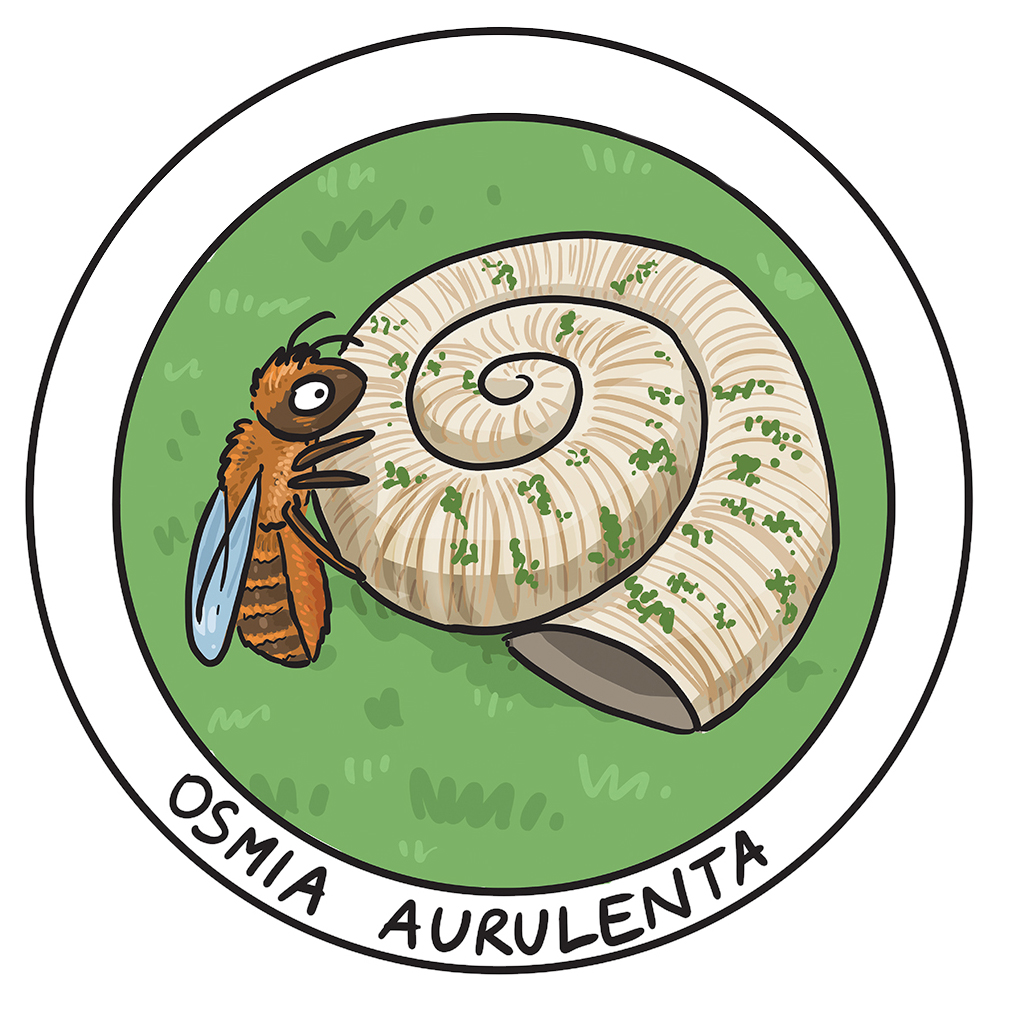
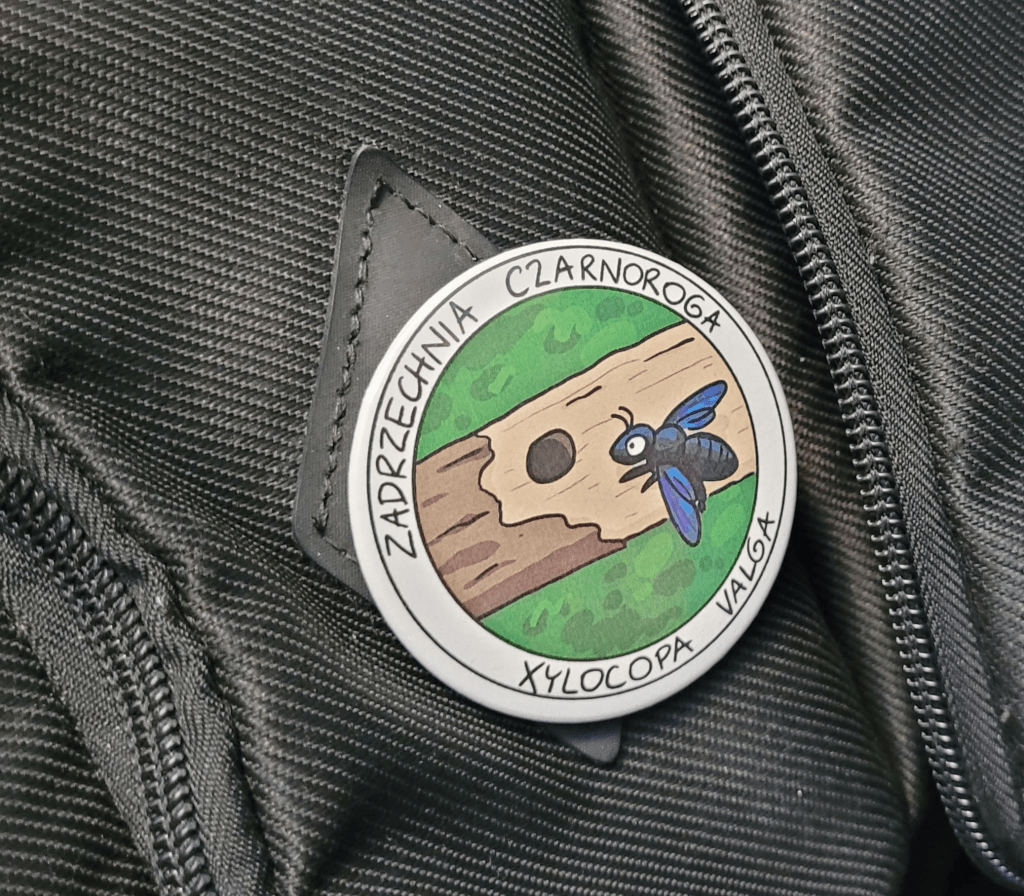
A friend of mine has a button pin machine and I got a pin with the large carpenter bee. It goes with me everywhere on my backpack. There is a Polish common name, in addition to the scientific one.
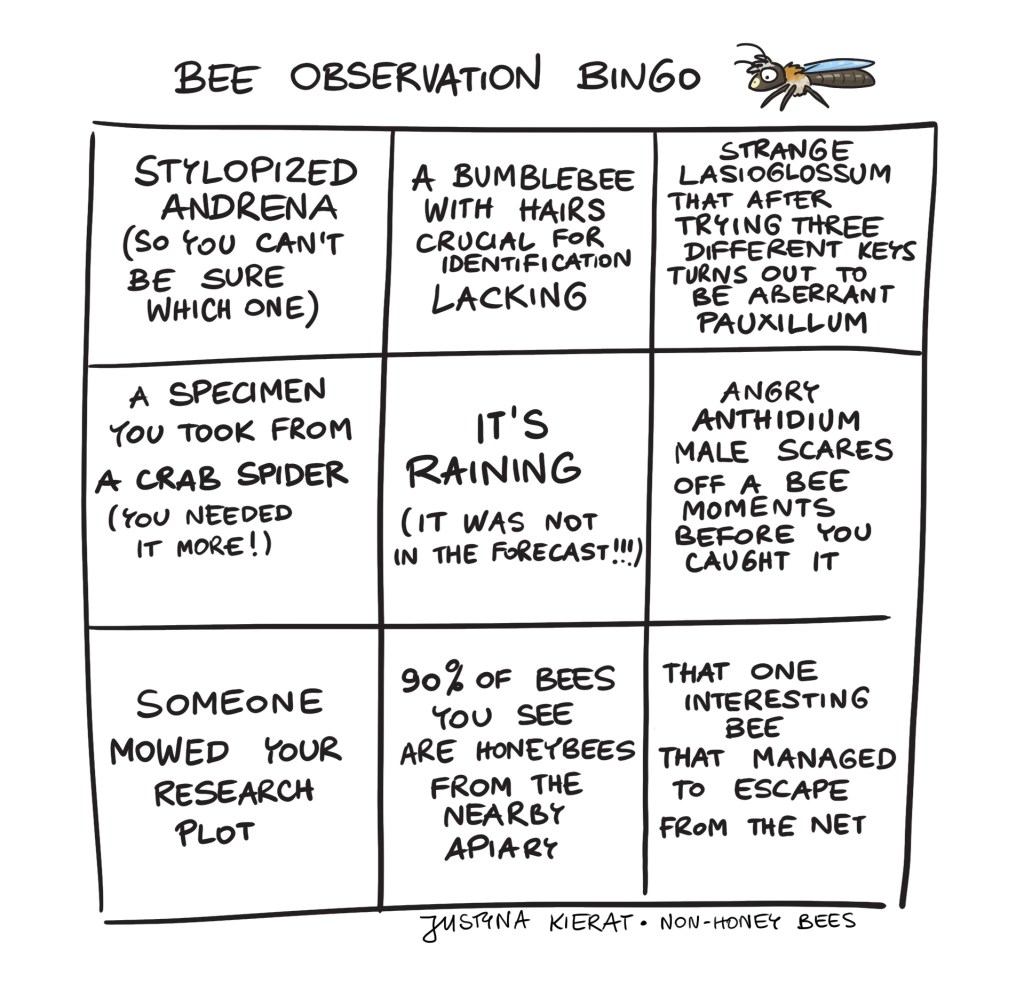
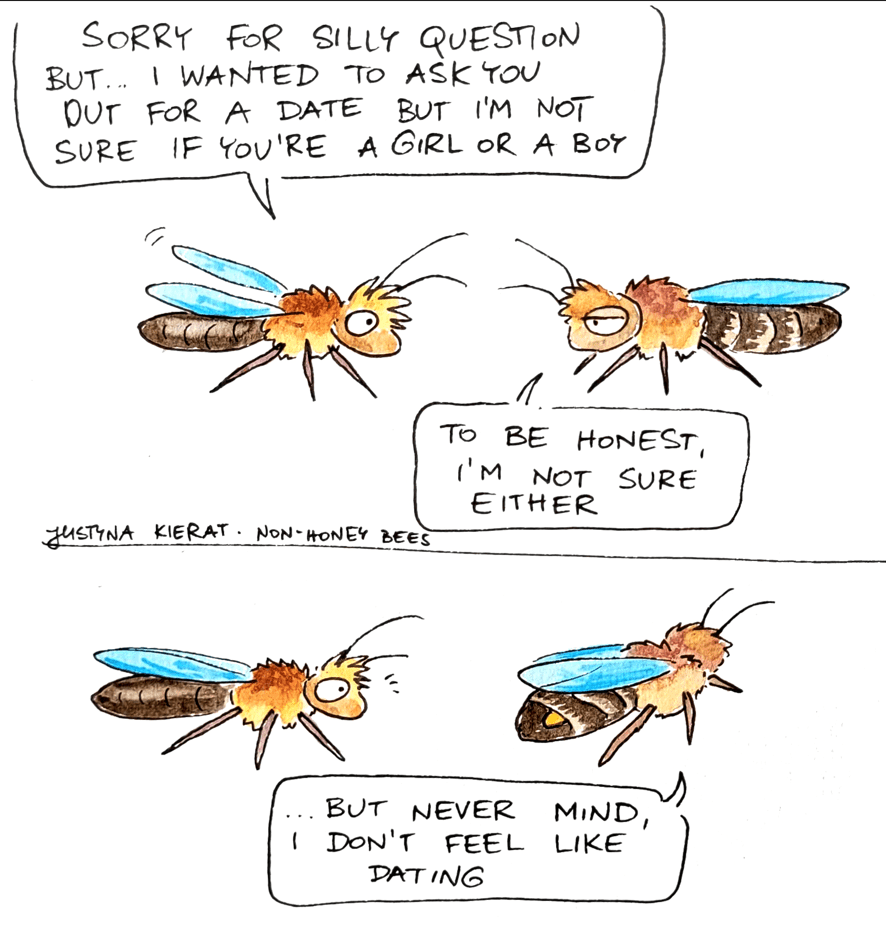
Twisted-wing insects (Strepsiptera) are extraordinary parasites. They parasitise various other insects, bees among them. Because Strepsiptera parasitising bees belong to Stylopidae family, affected bees are called ‘stylopised’. The parasite has an extraordinary life cycle. The female spends her whole life inside the host’s abdomen, with only her head sticking out from between tergites. Male lives the same way only up to pupation, and adult males are extremely short-lived: they die after a few hours. They have one pair of fan-shaped wings.
The parasite causes extensive changes in the host’s appearance and behaviour. Stylopized bees don’t reproduce, and they look as intersexes (males acquire some female morphological traits, and vice versa), which makes them harder for entomologists to identify to the species level.
This post was published on Instagram in cooperation with The Pollinator Academy. I’m happy to be involved in this initiative. If you are interested to learn about European pollinator species, in particular bees, hoverflies and butterflies, and recognizing them, check out the PA website!
Happy Easter!
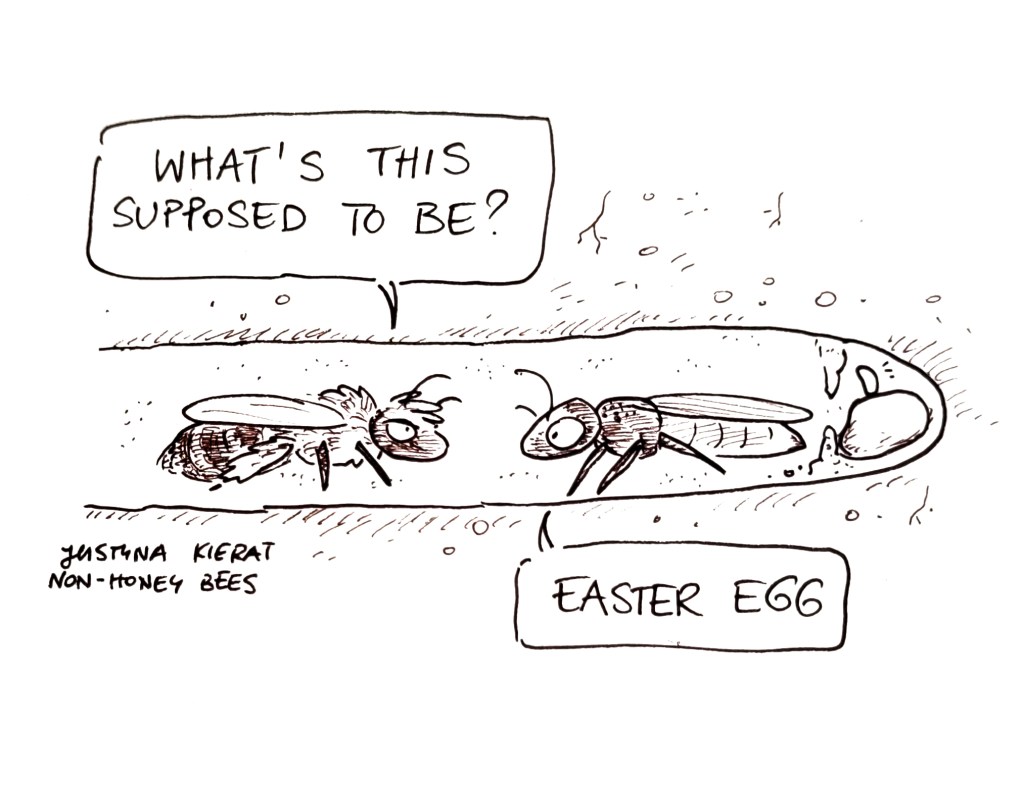
As on a black-and-white cartoon it may be hard to tell the species, I’ll tell you that it’s Colletes cunicularius – a spring solitary bee common in Europe, and Sphecodes albilabris – its cuckoo.
Many species of cuckoo bees sneak into the host’s nest when it’s open, to lay their eggs inside. If they encounter their host, it may pay no attention to the intruder (I had a cartoon about it) or a fight may start. Sphecodes are quite aggressive and they often kill the host.
I hope you don’t have yet enough of them! Here is the first post about these bees where you can learn more about them and find a link to a very interesting paper.
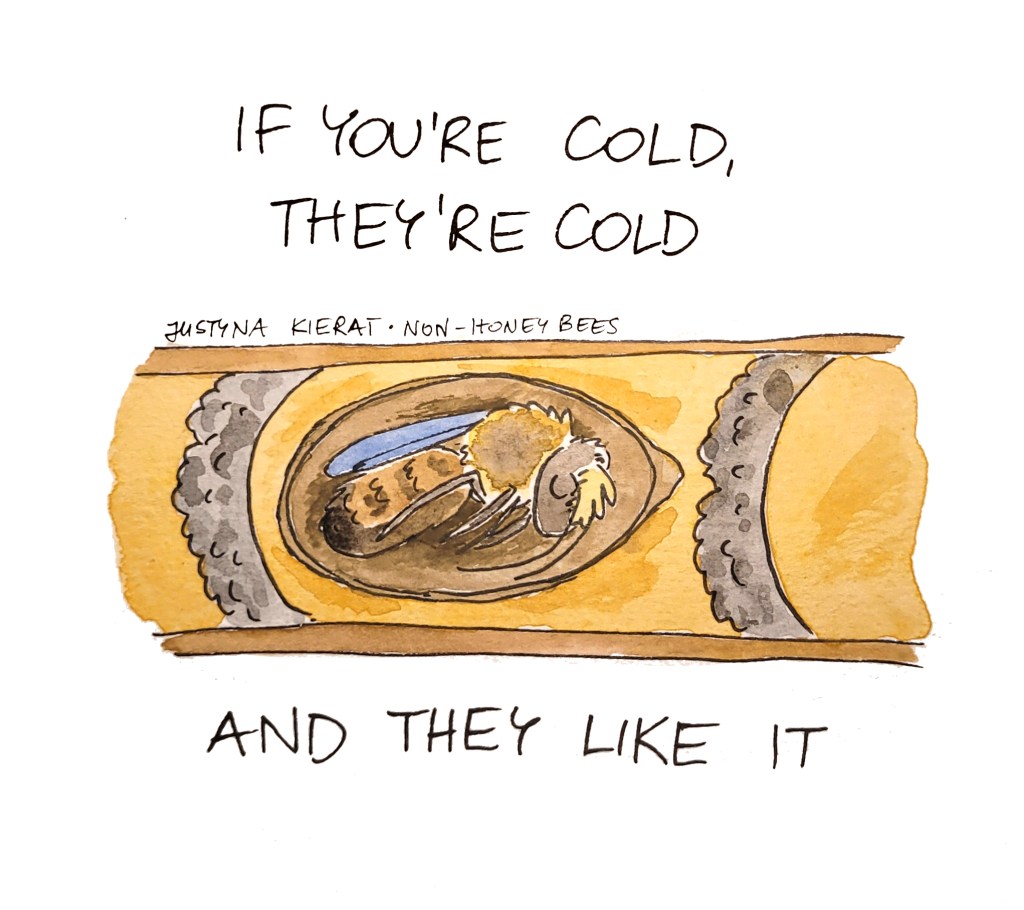
In a temperate, seasonal climate bees spend winter in diapause. They usually overwinter as prepupae (that is, as a larva that ate everything it could and is ready for pupation) or, more rarely, as adults. I often hear from people who have bee hotels in their gardens, or who breed red mason bees as a hobby, that they are afraid that their bees will freeze in winter. They want to put them somewhere in a sheltered and warm place to help them survive. Actually, it’s a very bad idea. The bee species native to the seasonal environment are not only adapted to survive low temperatures. They may simply need them! The red mason bee, one of the best studied solitary bee species, can endure about -30°C (-22°F) but constant temperature of about a dozen Celsius degrees can cause trouble. When kept in a room temperature, the red mason bees may emerge in the middle of winter or die in the cocoon. It sometimes happens when a female built her nest inside a house, or the nest was brought home, either accidentally or purposefully (in an attempt to ‘keep the bees warm’).
Bringing the nests home for winter is not the biggest threat for overwintering bees. More disturbing is the climate change, manifesting itself with higher mean temperatures, but also warmer and shorter winters.
This post was published on Instagram in cooperation with The Pollinator Academy. I’m happy to be involved in this initiative. If you are interested to learn about pollinators, in particular bees, hoverflies and butterflies, and recognizing them, check out the PA website!
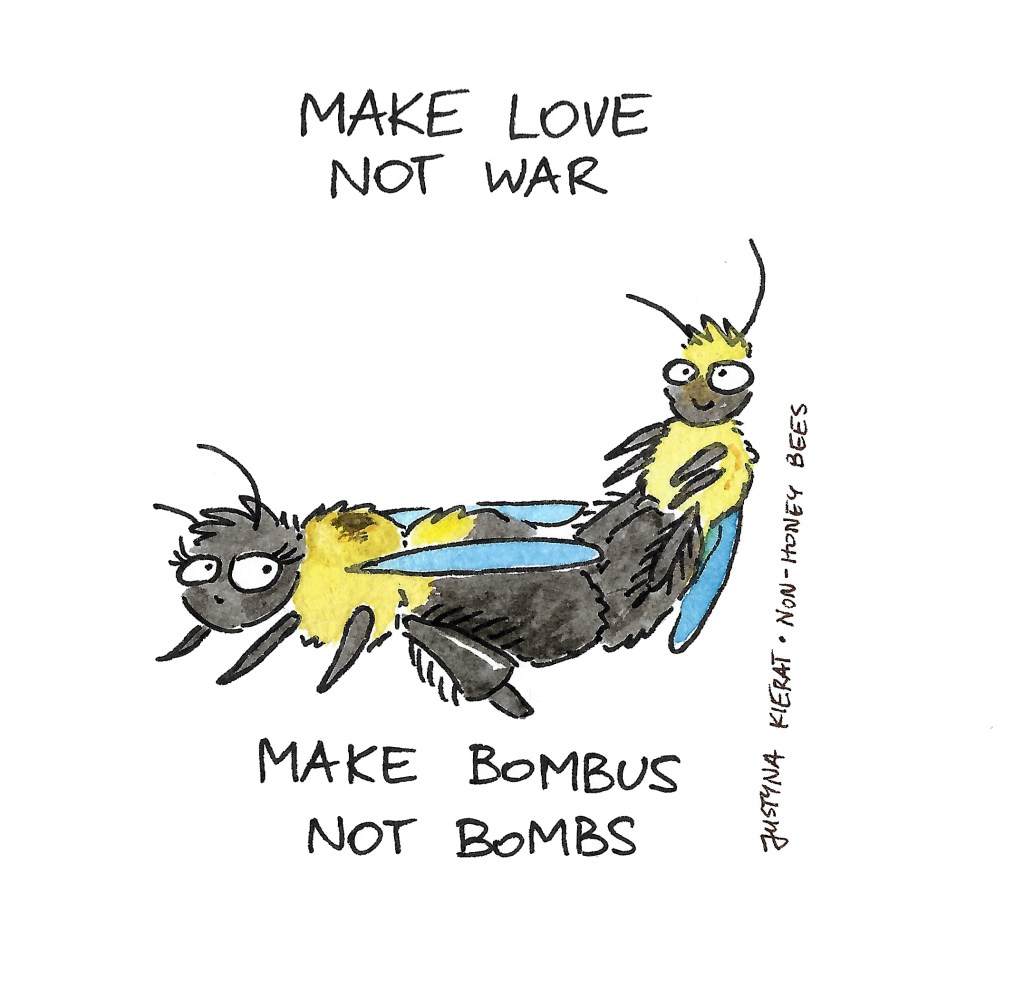
Being active in various fb groups taught me that many people don’t know what bees look like when they are making love. If you also didn’t know that, you do now, thanks to this cartoon.
Thank you for visiting my website! If you’d like to support my work, you can do it here https://buycoffee.to/justynakierat
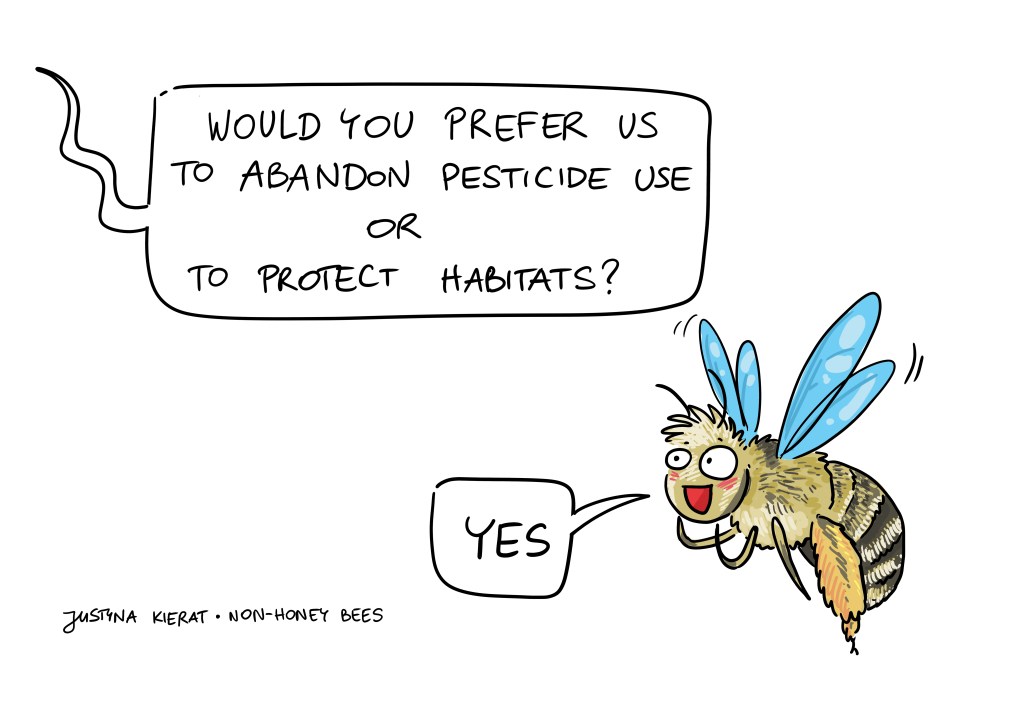
Today’s cartoon is a slightly changed version of one I posted on my Polish blog some time ago. I remembered about it after reading a paper entitled “Pesticides and habitat loss additively reduce wild bees in crop fields” by Anina Knauer et al. (2025). It is a huge analysis of data collected from nearly 700 crop fields, aiming to answer the question of how pesticide use and habitat loss impact bee numbers and species diversity.
Unsurprisingly, it turned out that both these factors have important effects on wild bees. But what was less expected, pesticides and availability of semi-natural habitat act additively. It means that, for example, pesticides aren’t less harmful if we provide the bees with more semi-natural habitat in places where they are used. To help bees, we must address both these issues.
It doesn’t mean that action aimed at solving one of the bees’ problems alone is useless. Every small step can help and is important to do. But we should not assume that solving only one problem is enough to save our pollinators.