Featuring: Nomioides minutissimus and Megachile parietina. I also hope you recognize the Biblical reference 
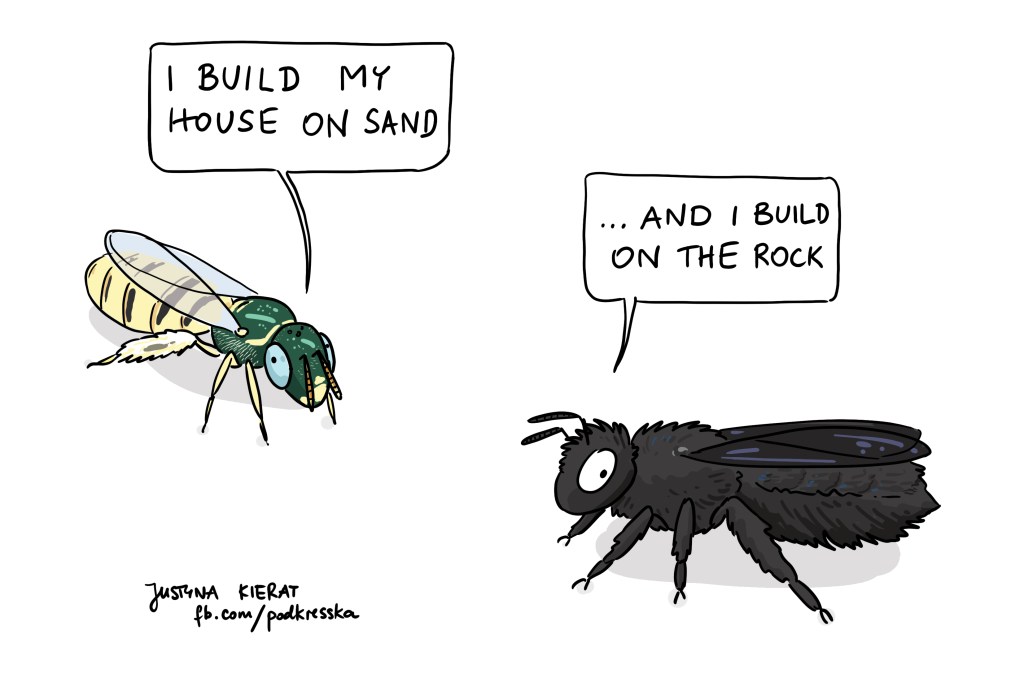
Featuring: Nomioides minutissimus and Megachile parietina. I also hope you recognize the Biblical reference
Some solitary bees leave their nests open when they go foraging, but others cover the entrance before leaving. Grey-backed mining bee, Andrena vaga, not only covers the nest but also sometimes digs a false nest entrance a few centimeters away and leaves it open. It is a way to deceive its nest parasites which would like to lay their eggs in her nest. Sometimes not only cuckoo bee is fooled by this false nest, but also the returning mining bee itself flies straight to it, before realizing its mistake.

I just read in the book by Stephen Buchmann that sex pheromones of Xylocopa sonorina males are rose-scented, and this scent can be perceived by humans.

“[Stingless bee] colonies store both pollen and honey that can last the colony a few months (…). These stores can also allow marine dispersal of colonies via rafting.”
– from Roubik DW 2023, “Stingless bee (Apidae: Apinae: Meliponini) ecology”, Annual Review of Entomology

Megachile sculpturalis, giant resin bee, is an invasive species in several European countries. It is native to Asia.

Bombus wurflenii’s Polish name is “six-toothed bumblebee” – this refers to its toothy mandibles. It is one of the species which frequently make holes in some flowers, in order to rob nectar from them. The females often fly in the bad wether and even rain which is very unusual for a bee.


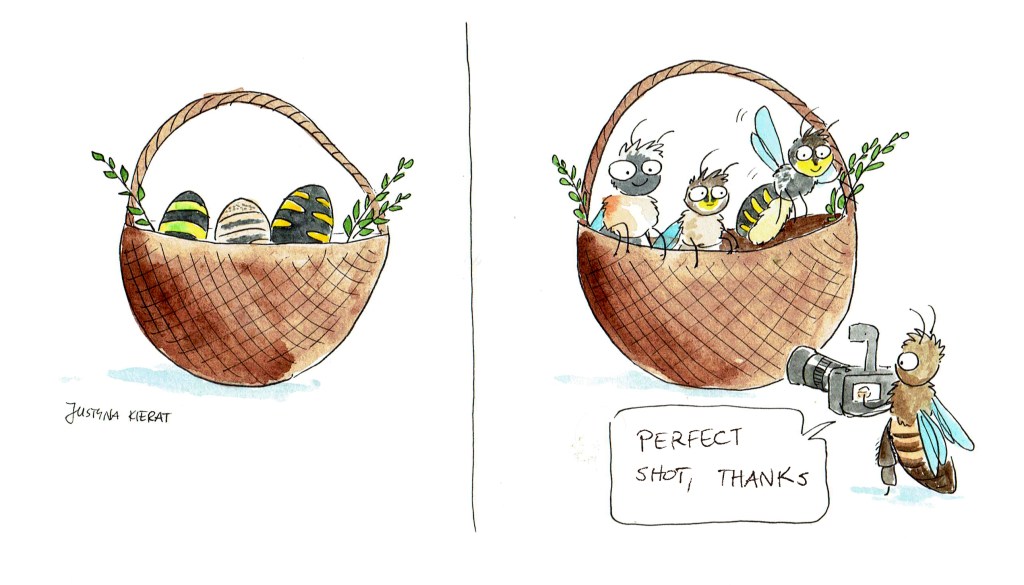

 ) snail shells.
 Non-honey bees