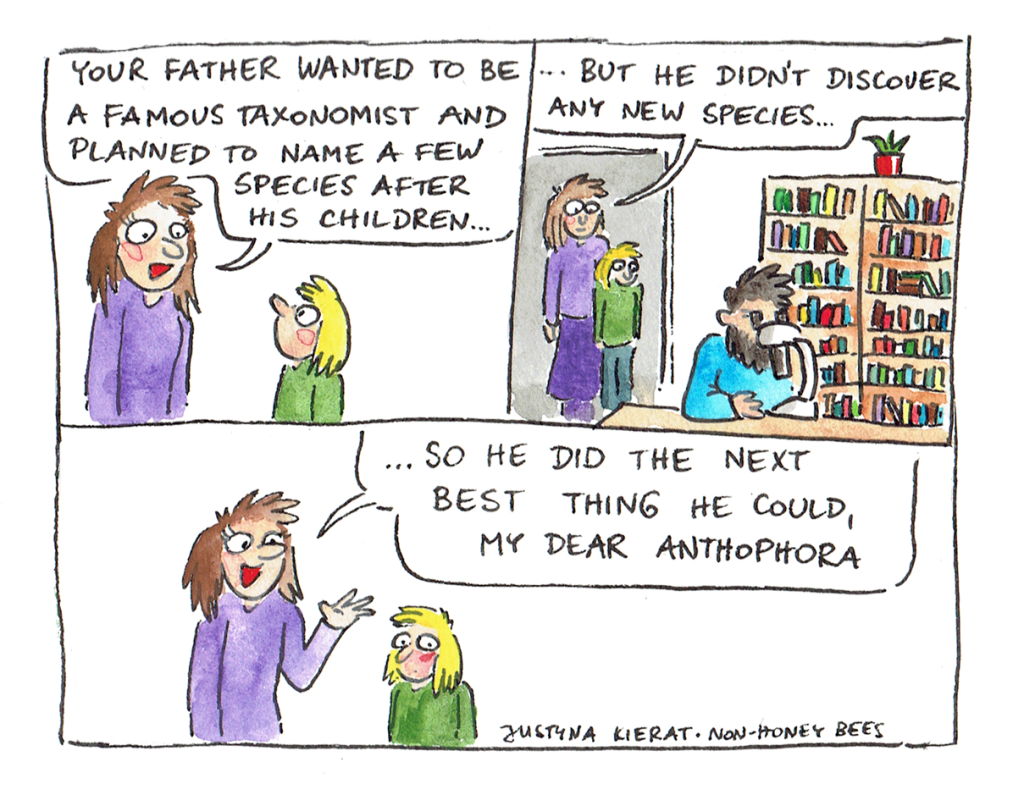
Taxonomists are scientists who study species. They seek to answer questions such as which traits distinguish one species from another, and how species evolve. When a taxonomist discovers a species that is new to science, they have the right to name it. Each scientific name has two parts: the first part is usually fixed, as it refers to the genus to which the species belongs. The discoverer is free to choose the second part. Provided they comply with the rules set out in the International Code of Zoological Nomenclature, they can choose anything. Some taxonomists name species based on their characteristic traits — for instance, ‘bicornis’ means ‘two-horned’ and refers to the small horns on the face of the female red mason bee (Osmia bicornis). Others honour important figures in science or people who are important to them. You can also find names that refer to popular culture or are humorous.
Today’s post was published on Instagram in cooperation with Pollinator Academy. From their website: “The Pollinator Academy is a European, open source platform for sharing taxonomic knowledge. It is a learning platform aiming to strengthen taxonomic capacity throughout Europe and was created through close collaboration between specialists and trainers from different institutes.” Among the training materials, there is one about taxonomy and naming new species – check it out here 🙂
 Non-honey bees