Bees love sun, of course! If you want to go bee-watching, it’s best to choose a warm, sunny day without much wind.
But… do you remember that one bumblebee who likes rain? It was on the blog quite a while ago 🙂

Bees love sun, of course! If you want to go bee-watching, it’s best to choose a warm, sunny day without much wind.
But… do you remember that one bumblebee who likes rain? It was on the blog quite a while ago 🙂
In #beetober it will be (hitch)hike.
Surely you saw bumblebees with small brownish “dots” in their hair. You might think that they are varroa but they’re not. Varroa is a parasite which attacks presently only honeybees. Those bumblebee “dots” are mites, too, but they don’t suck their haemolymph or do any harm – in this life stage they are just hitchhiking to the bumblebee nest. Inside a bumblebee colony, they often are harmless or even beneficial, eating debris or hunting for harmful mite species. So, you don’t need to worry about a bumblebee carrying mites on her.
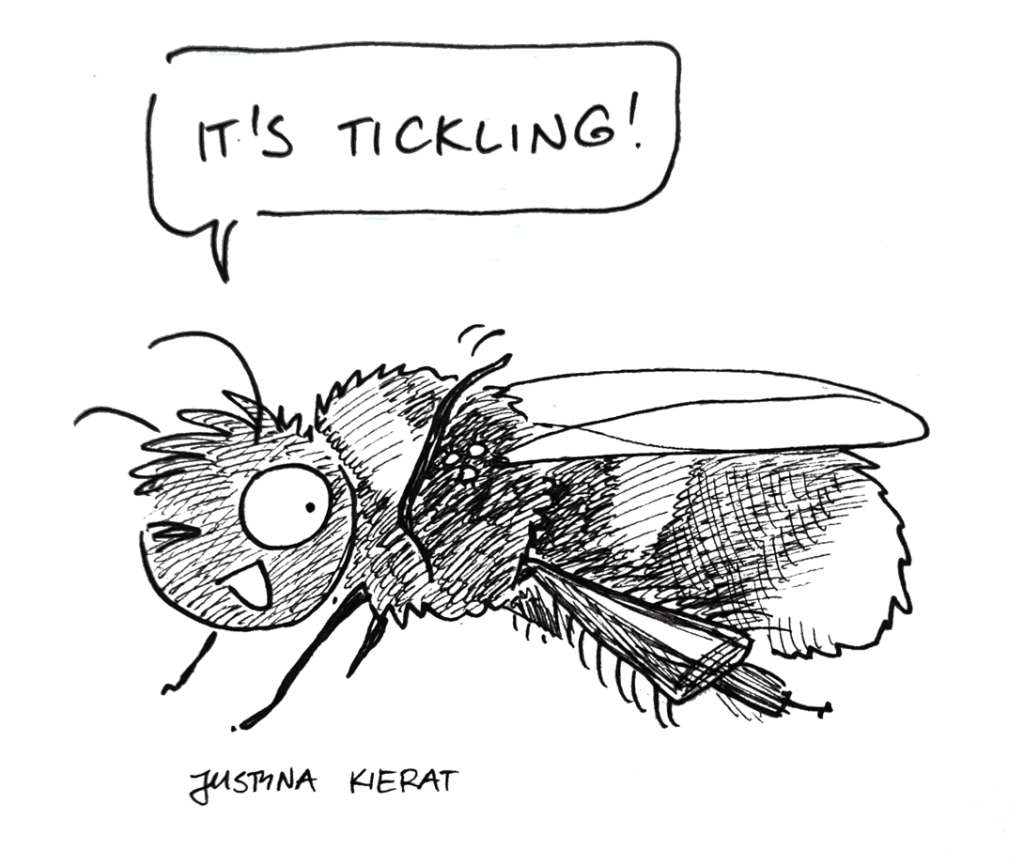
#inktober aka #beetober day 7, passport. Why not picture a bee which is crossing many country borders recently? Halictus scabiosae, a species expanding its range with impressive speed, according to some sources even 50 km/year.
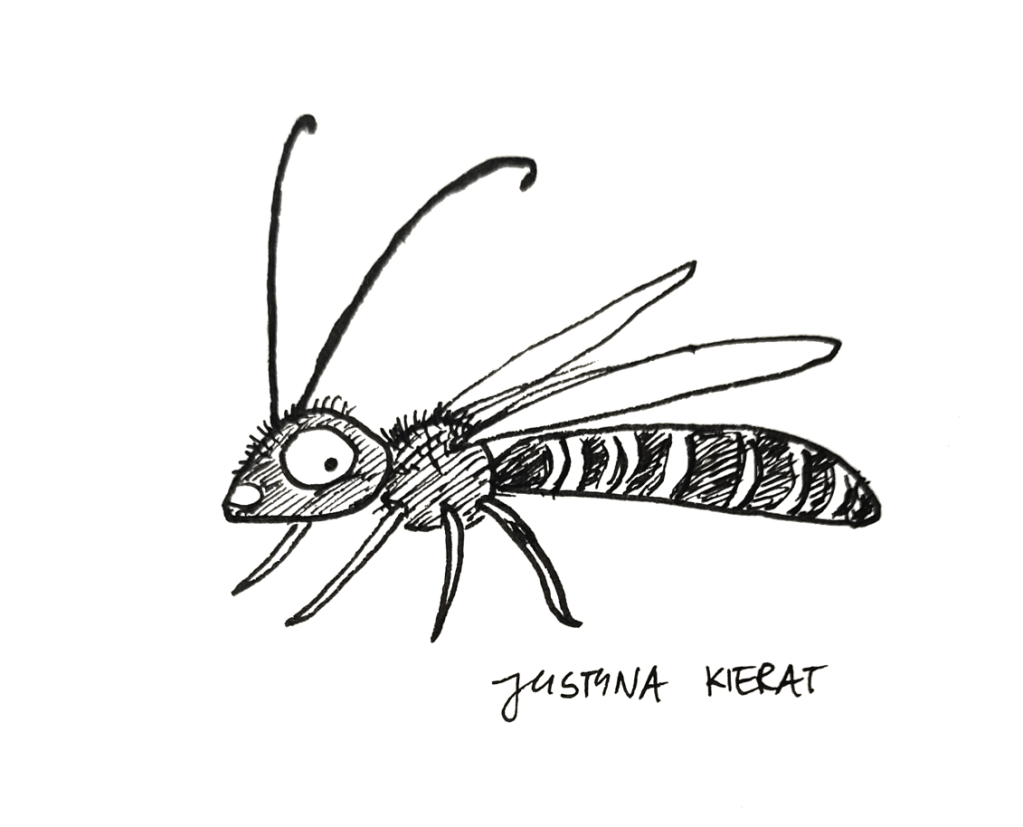
Today’s #inktober word is #binoculars. Well, that was easy one 🙂
Binocular microscope is very useful tool when you want to identify bees. Many bee species are, unfortunately, hard or impossible to identify to species without looking at them in magnification. That’s one of the reasons why entomological work involves much catching and killing. However, field identification of bees is increasingly more popular (thanks to, among others, many wildlife photographers and citizen scientists), and I believe it will be more and more developed, as new diagnostic traits visible in live specimens will be sought, allowing to identify more species without killing or even catching. Fingers crossed 🙂

#inktober, #beetober or #inktobee day 4: exotic
Exotic species are those which are not native for a given area but were introduced (puorposefully or accidentally) by humans. In Europe, we have at least one such species: Megachile sculpturalis, which was once a guest on this fanpage. Today I chose the European wool carder bee (Anthidium manicatum) which is not exotic for me – in Poland it is common native species – but was introduced to North America and is considered invasive alien species there.
Road verges are often buzzing with pollinators. If they are rarely mowed, or even consist of sown flowers, they provide food for bees, butterflies and others. But living by a road has its disadvantages. One of them is a risk of being hit by car when crossing the road. I don’t know whether costs or benefits of flowering road verges for pollinators prevail, the review I read on the topic was inconclusive. Anyway, I would not sow flowers on the highway median strip.

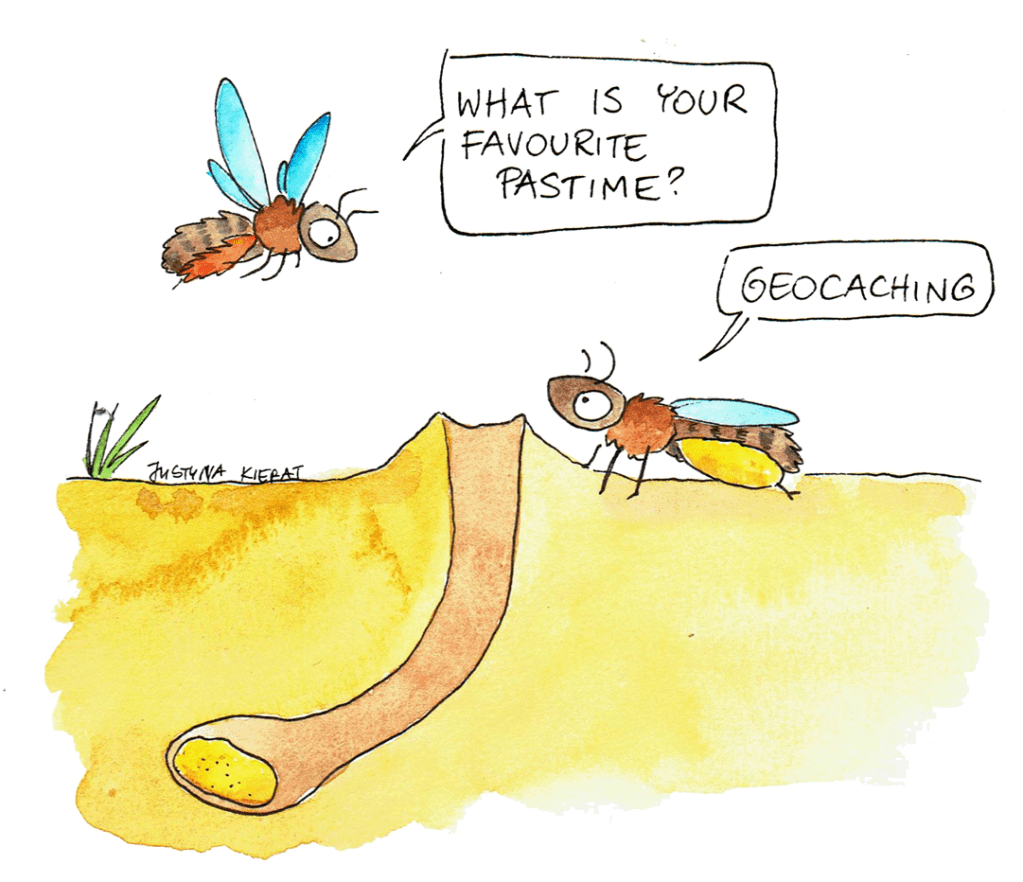
I just read in some paper that female bees cache pollen and nectar for their offspring. Usually underground, of course.
Another cartoon about pollen specialist bees, that is, species where females collect pollen exclusively from a certain group of plant species. Viper’s bugloss mason bees (Hoplitis adunca and H. anthocopoides) are examples of such specialists. They both are native to Europe and some neighbouring regions but H. anthocopoides can now be found also in North America where it was introduced.

Some bee species look very similar to each other, so much that sometimes it is difficult to tell them apart even by professionals. It’s interesting that sometimes they look alike but differ in their biology. For example, Andrena afzeliella and Andrena ovatula, thought to be one species until recently, have distinct food preferences. The former prefers flowers of Fabaceae but likes many different species of this family, the latter’s diet is restricted to bushes belonging to this family, like gorse.

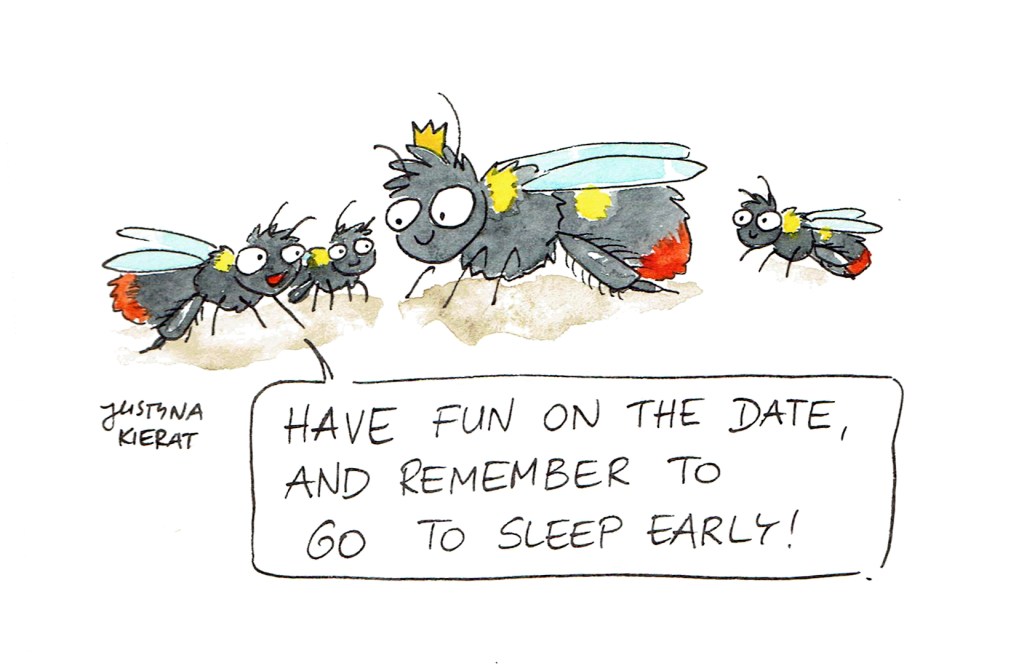
Young bumblebee queens spend a few days feeding and looking for a male to mate. Then, they don’t wait for winter to come but dig a hibernaculum and go to sleep – sometimes as early as June!
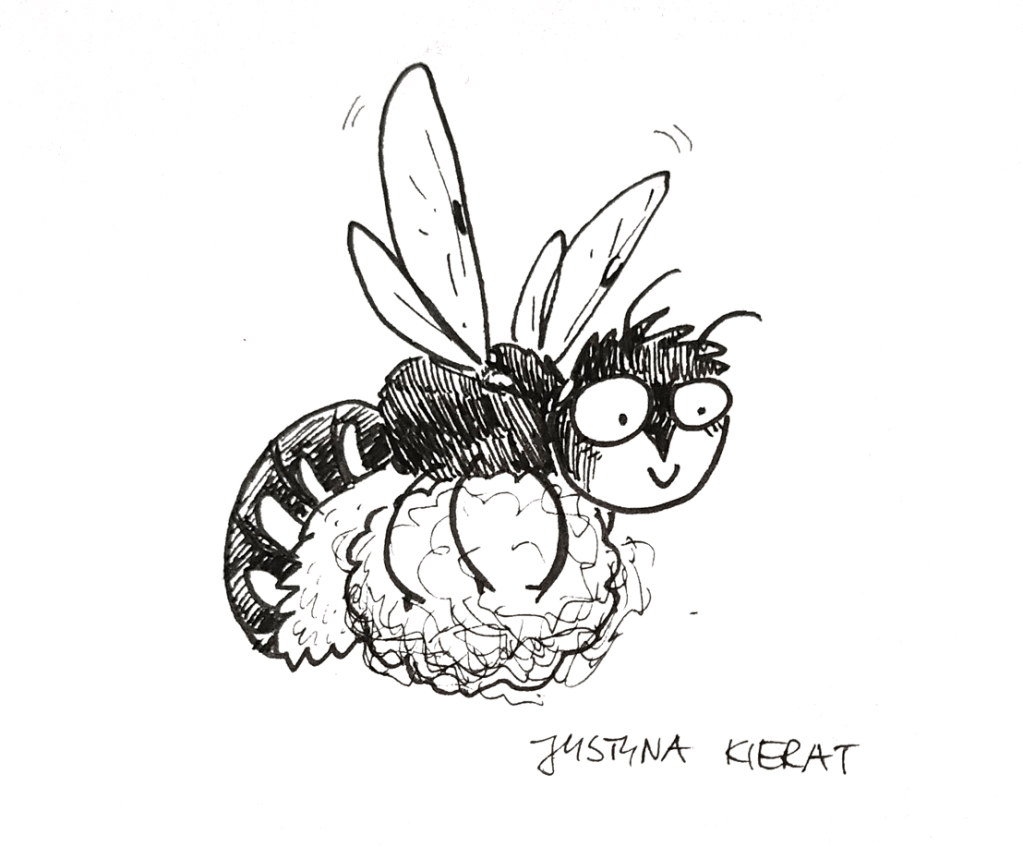
The European wool carder bee (Anthidium manicatum) lines her nest with hairs scrapped off the plants like Stachys byzantina or Helichrysum arenarium. Females can be seen with balls of wool under their abdomen, when they carry it back to the nest.

Bumblebees are animals of colder climates than most bees, and climate change can affect them negatively in various ways. One of dangers are heatwaves. They can not only simply kill the individuals but also impair their memory.


