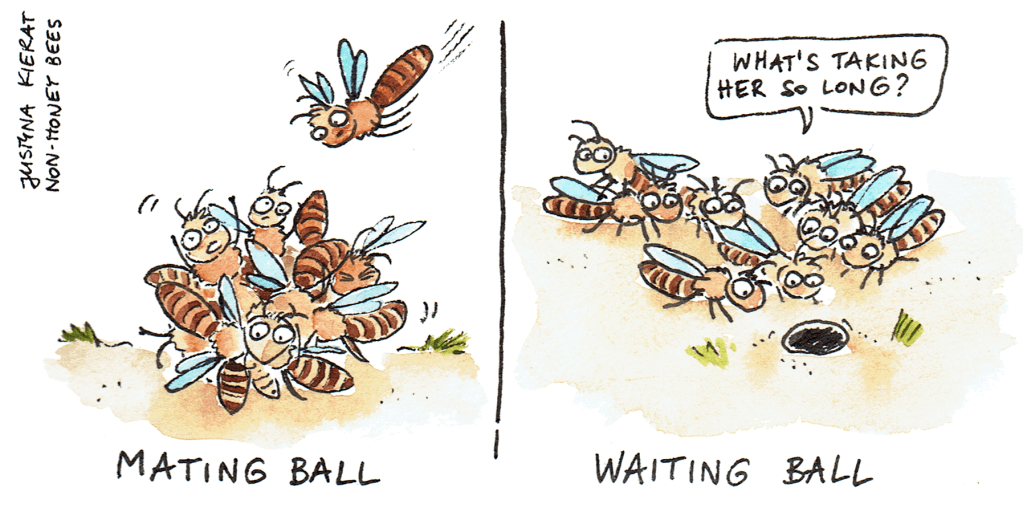
Recently, I had the pleasure of admiring a nesting aggregation of my beloved ivy bees in the company of other melittologists. At one point, I heard someone say, ‘Here’s the waiting ball.’ As you might have guessed, I misheard — it was actually the mating ball. But my imagination began to run: what should a waiting ball of bees look like? You can see my idea here.
I’m excited to share with you a paper about my discovery In general, it’s nothing big, but it is for me We have officially added the ivy bee, Colletes hederae, to the checklist of species of Poland! It was expected for quite a while, and the question was only – who, when and where will find it? It seems that it was me last autumn… and what is even better, I found the ivy bees in two places, some 450 kilometers apart! One locality is at the western border of the country, and the other in Kraków, in southern Poland. I don’t believe the ivy bees came to the latter spot all the way from Germany, unobserved by anyone. They must have come another route, from the south. So it seems that we had an invasion from two directions! Of course, it’s not an invasion in the sense of an invasive alien species, because the ivy bee is native to Europe and increases its range without human involvement, apart from our part in the recent climate change. I must add here that the effect of climate change on bees is different depending on the species, and most of them are not as lucky as the ivy bee now, and the global changes are harmful for them. So, I’m happy that we have our ivy bees in Poland at last but at the same time I’m not happy about climate change.

 In general, it’s nothing big, but it is for me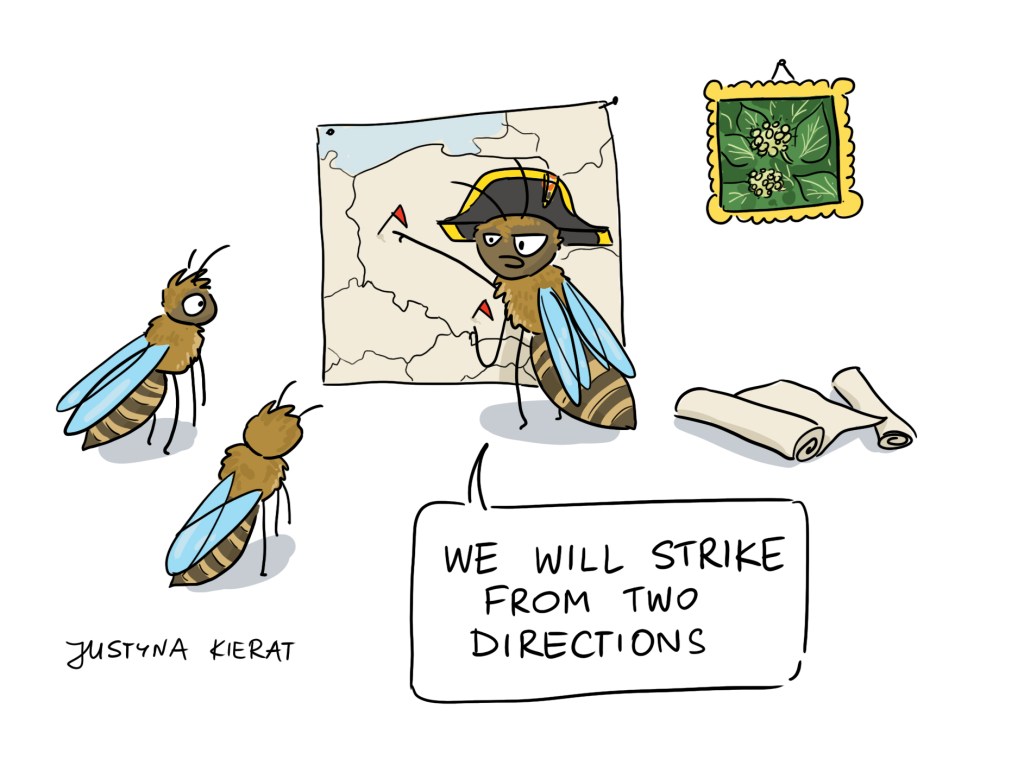
 Non-honey bees