I hope you don’t have yet enough of them! Here is the first post about these bees where you can learn more about them and find a link to a very interesting paper.
I hope you don’t have yet enough of them! Here is the first post about these bees where you can learn more about them and find a link to a very interesting paper.
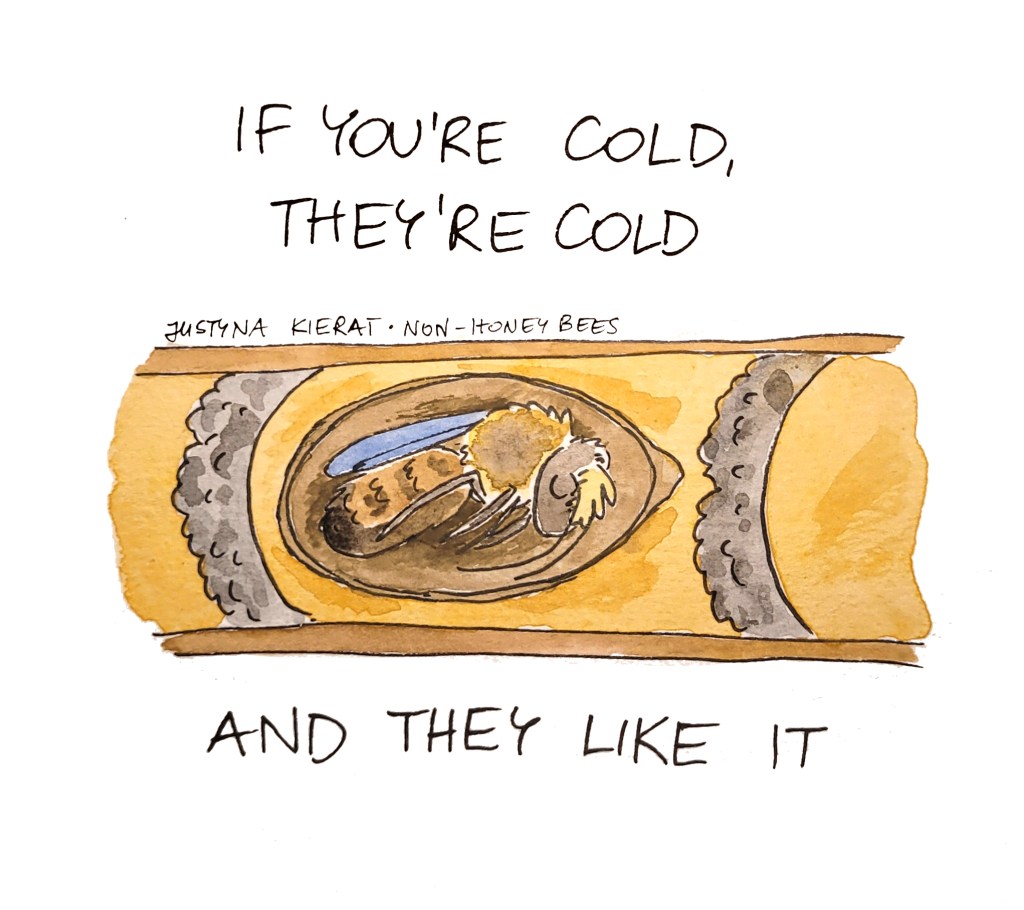
In a temperate, seasonal climate bees spend winter in diapause. They usually overwinter as prepupae (that is, as a larva that ate everything it could and is ready for pupation) or, more rarely, as adults. I often hear from people who have bee hotels in their gardens, or who breed red mason bees as a hobby, that they are afraid that their bees will freeze in winter. They want to put them somewhere in a sheltered and warm place to help them survive. Actually, it’s a very bad idea. The bee species native to the seasonal environment are not only adapted to survive low temperatures. They may simply need them! The red mason bee, one of the best studied solitary bee species, can endure about -30°C (-22°F) but constant temperature of about a dozen Celsius degrees can cause trouble. When kept in a room temperature, the red mason bees may emerge in the middle of winter or die in the cocoon. It sometimes happens when a female built her nest inside a house, or the nest was brought home, either accidentally or purposefully (in an attempt to ‘keep the bees warm’).
Bringing the nests home for winter is not the biggest threat for overwintering bees. More disturbing is the climate change, manifesting itself with higher mean temperatures, but also warmer and shorter winters.
This post was published on Instagram in cooperation with The Pollinator Academy. I’m happy to be involved in this initiative. If you are interested to learn about pollinators, in particular bees, hoverflies and butterflies, and recognizing them, check out the PA website!
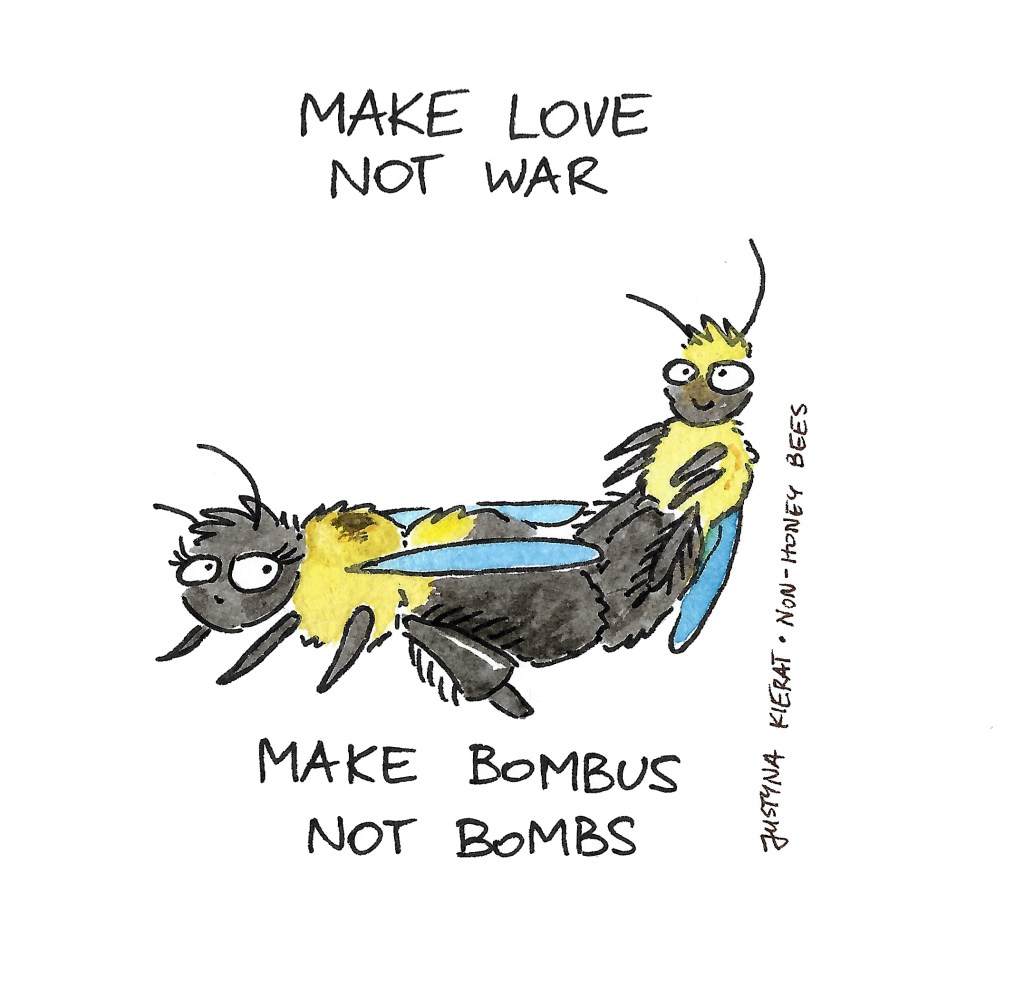
Being active in various fb groups taught me that many people don’t know what bees look like when they are making love. If you also didn’t know that, you do now, thanks to this cartoon.
Thank you for visiting my website! If you’d like to support my work, you can do it here https://buycoffee.to/justynakierat
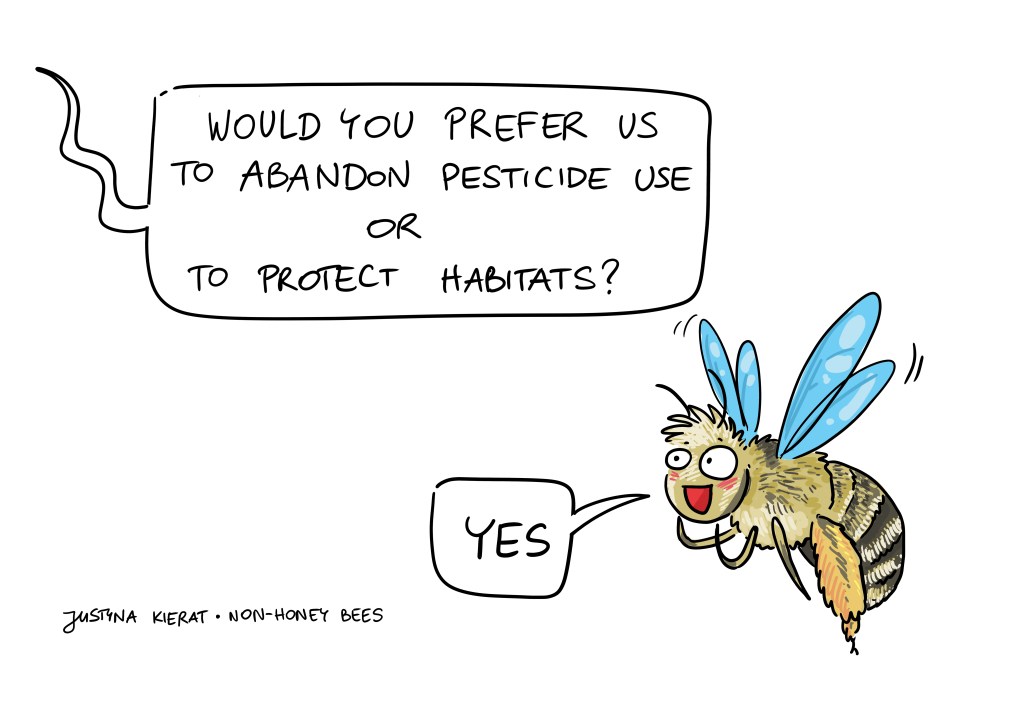
Today’s cartoon is a slightly changed version of one I posted on my Polish blog some time ago. I remembered about it after reading a paper entitled “Pesticides and habitat loss additively reduce wild bees in crop fields” by Anina Knauer et al. (2025). It is a huge analysis of data collected from nearly 700 crop fields, aiming to answer the question of how pesticide use and habitat loss impact bee numbers and species diversity.
Unsurprisingly, it turned out that both these factors have important effects on wild bees. But what was less expected, pesticides and availability of semi-natural habitat act additively. It means that, for example, pesticides aren’t less harmful if we provide the bees with more semi-natural habitat in places where they are used. To help bees, we must address both these issues.
It doesn’t mean that action aimed at solving one of the bees’ problems alone is useless. Every small step can help and is important to do. But we should not assume that solving only one problem is enough to save our pollinators.
If monolectic bees could talk, would they be monotematic?
Monolecty means that a bee species uses pollen from only one species of plant or, in the broader sense proposed by Cane, from only one genus of plants. Species which collect from more species/genera, but all belonging to only one plant family, are called oligolectic. Other bees, more generalised in their pollen choices, are called polylectic.
Bees from the genus Macropis collect pollen (and floral oils) from Loosestrife (Lysimachia), which makes them, depending on which definition you use, narrowly oligolectic or monolectic.

Here you can find the study I refer to in this cartoon. No additional comment is needed here, I believe 😉

This post was published on Instagram in cooperation with The Pollinator Academy. I’m happy to be involved in this initiative. If you are interested to learn about pollinators, in particular bees, hoverflies and butterflies, and recognizing them, check out the PA website!
Have you ever seen a bumblebee lift its leg as if to say hello or give you a high five? The bee looks as though she wants to be friends with you. In reality, however, it’s the opposite.
In bee language, raising a leg is a sign of discontent. This message can be directed towards humans or other insects. It’s a warning not to approach any closer if you don’t want to get stung. However, in the case of males, it’s only a bluff as they don’t possess a stinger.

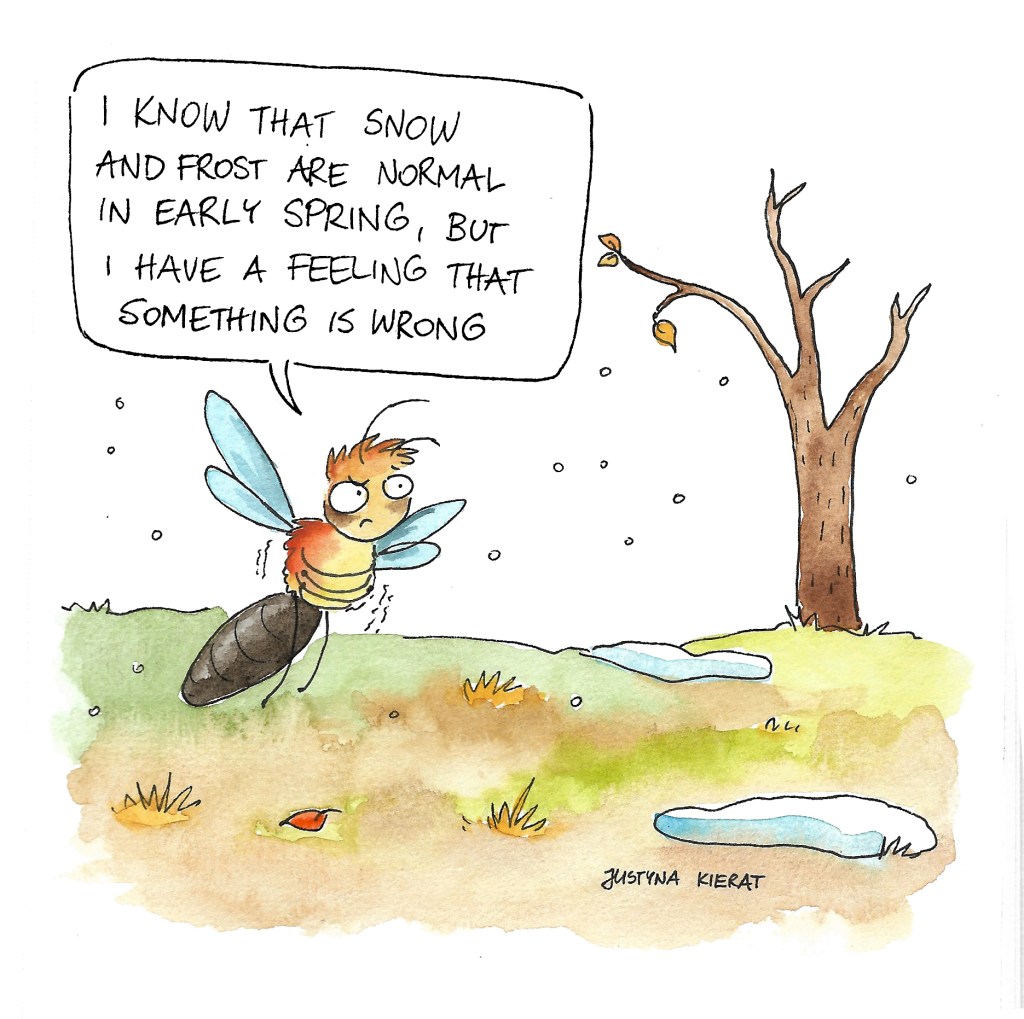
Many bee species only fly at a specific time of year. Sometimes, they are only active for a few weeks and you can’t see them at any other time… or can you?
Every autumn, occasional sightings of spring-active bees are reported. It is thought that these are either bees that were disturbed in their underground nests, e.g. by gardeners, or bees that simply made a mistake regarding to when to emerge. Sadly, their fate is pretty much sealed – they have little chance to live long, not to mention finding a mate of their own species and reproducing.
Rumour has it that the cases of spring bees active in autumn are becoming more frequent because of the climate change. However, I don’t know of any papers that explore this possibility. If you know of any, please post a link in the comments!
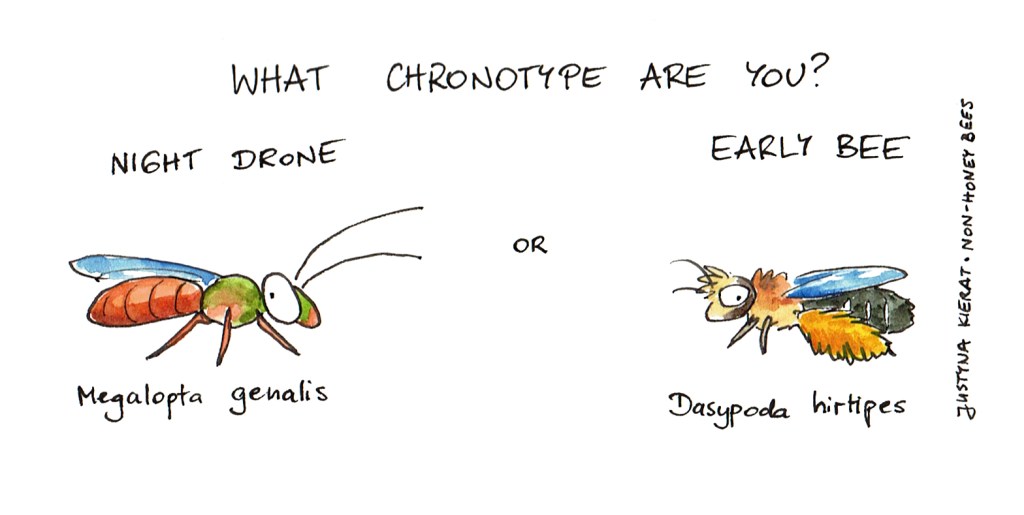
Do you like to get up early, or prefer sleeping in and staying up late? In Poland, we call the first type of people “the skylarks” and the second – “the owls”. I’m definitely the latter.
Bees usually are early risers, but you still can find a variability among them. The pantaloon bee, Dasypoda hirtipes, prefers flowers of common chicory, which usually open early and close already around noon. The bee also tends to finish her work early. At the other end of the spectrum are nocturnal bee species, which fly at dawn or dusk. They usually have large eyes and ocelli to catch as much light as possible. Probably the best known nocturnal species is Megalopta genalis (in the cartoon, I portrayed a male).
Mimicry is a phenomenon whereby different species resemble each other. One type of mimicry involves defenseless species resembling species that are somehow armed, e.g., poisonous or venomous. This is the case with defenseless hoverflies and stinging bees.The mimic gains protection when predators mistake it for the model and refrain from attacking.
Mimicry is not always perfect—sometimes the mimic only superficially resembles the model, but this is enough for it to gain benefits. A predator’s moment of hesitation can mean the difference between life and death. It is also important to remember that our perception of the world differs from that of other species, and what is different to us may be similar to a bird.
Today’s post was published on Instagram in cooperation with Pollinator Academy. From their website: “The Pollinator Academy is a European, open source platform for sharing taxonomic knowledge. It is a learning platform aiming to strengthen taxonomic capacity throughout Europe and was created through close collaboration between specialists and trainers from different institutes.” Want to check if you can tell a bee from a hoverfly? Take a look here!

The honey bee is a unique species of bee, and we have made it even more so. It is bred in large numbers, even in places that it would never naturally reach. It is the best-known species — ask any child about bees and see which ones they describe! When people hear that bees are in danger and need protection, the honeybee is often the first species that comes to mind. Many people want to become beekeepers or support apiaries in order to help the bees. However, the honeybee is not a species threatened with extinction. Artificially increasing its population doesn’t help and can even endanger wild bee species — many of which are actually vulnerable! Honeybees can outcompete wild bees when collecting pollen and nectar, and their diseases can spread to wild bee populations. When honeybees’ densities are very large, they compete with each other and diseases spread more easily, which is not good for them either.
I believe that most of you reading this are familiar with the issue. What you can do is spread the word to others. Let people know that there are many bees in the world (and even more pollinators) that need food, a place to nest and a safe environment — not more honeybee hives.

Shortly after emerging from the nest and mating, young bumblebee queens start looking for a place to hibernate. Typically, a female will dig a hibernaculum in the ground — a relatively short tunnel with a small chamber at the end. I was surprised to read that when a digging female encounters an obstacle in her way, like a pebble, she doesn’t try to bypass it but leaves the burrow and starts a new one. What could be the adaptive significance of this? Or is there none? If you know, please tell me!

 Non-honey bees