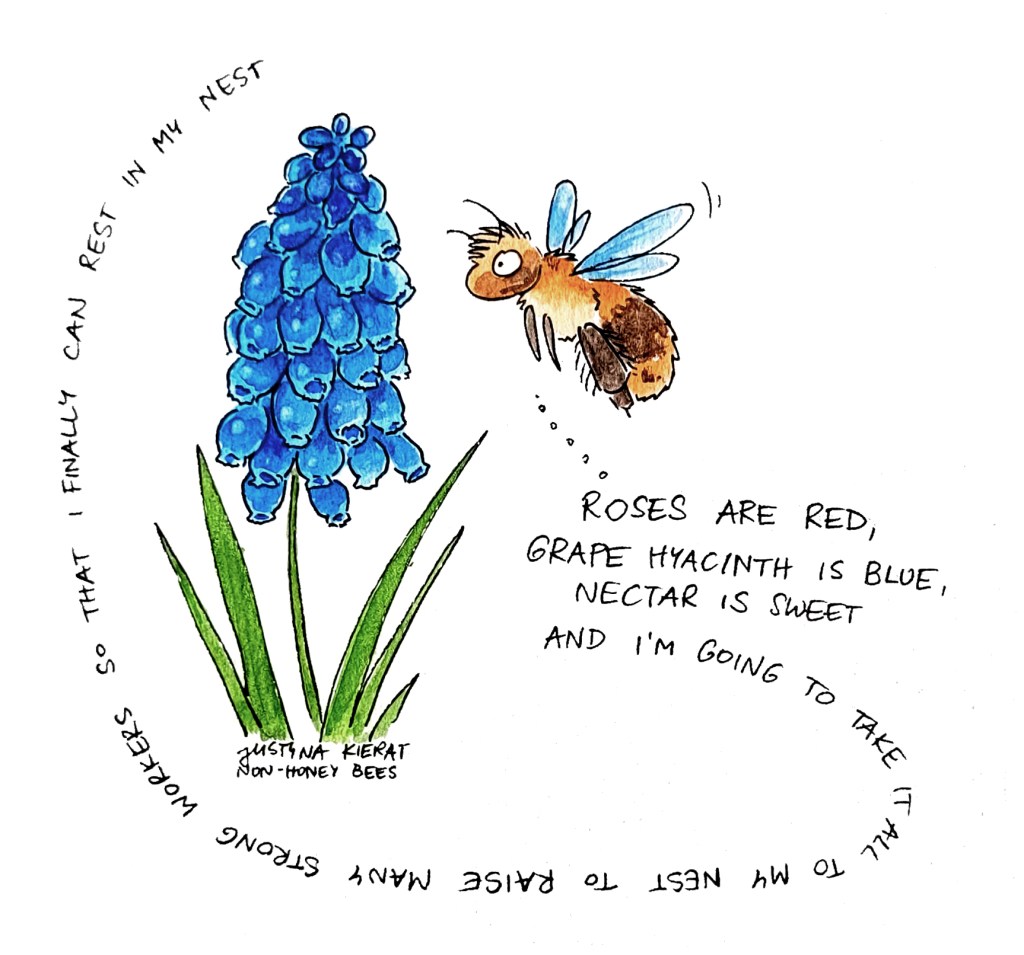
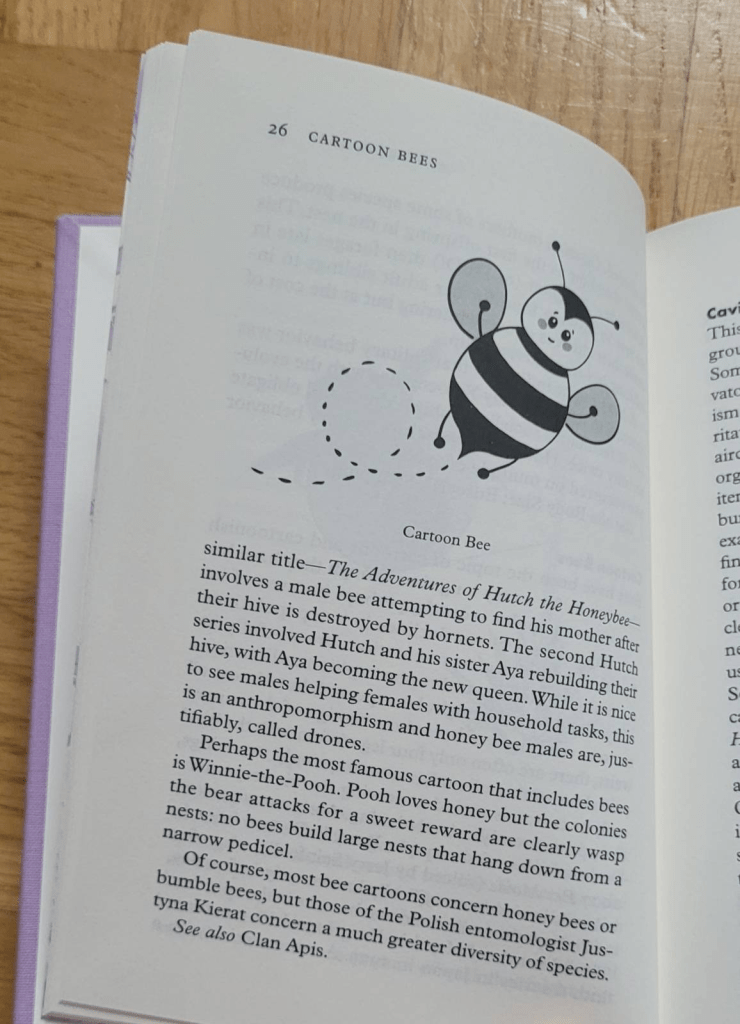
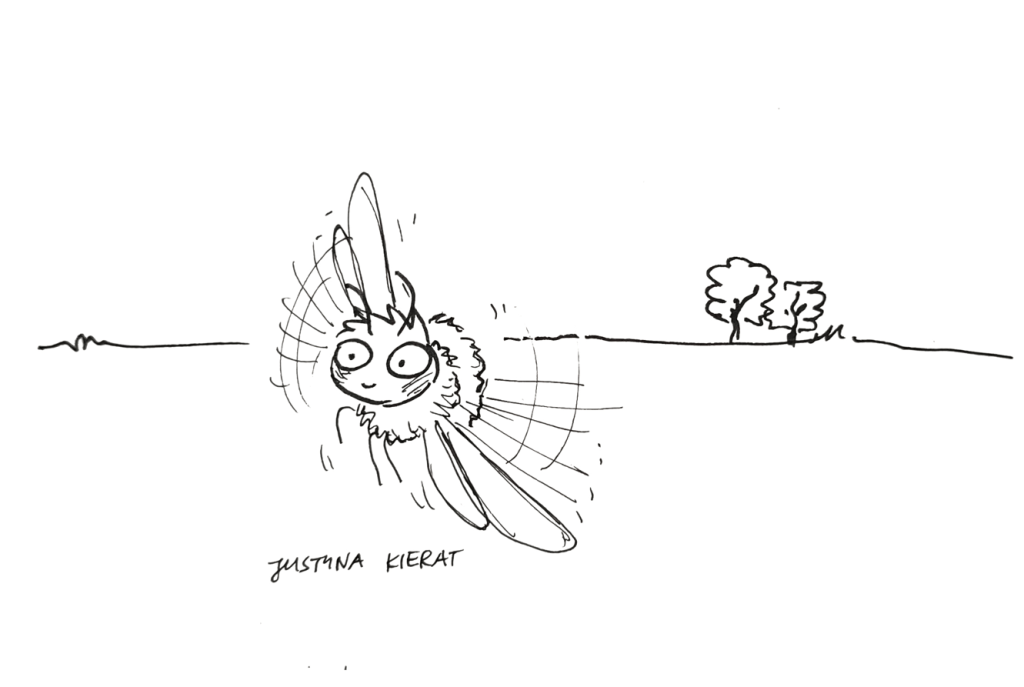
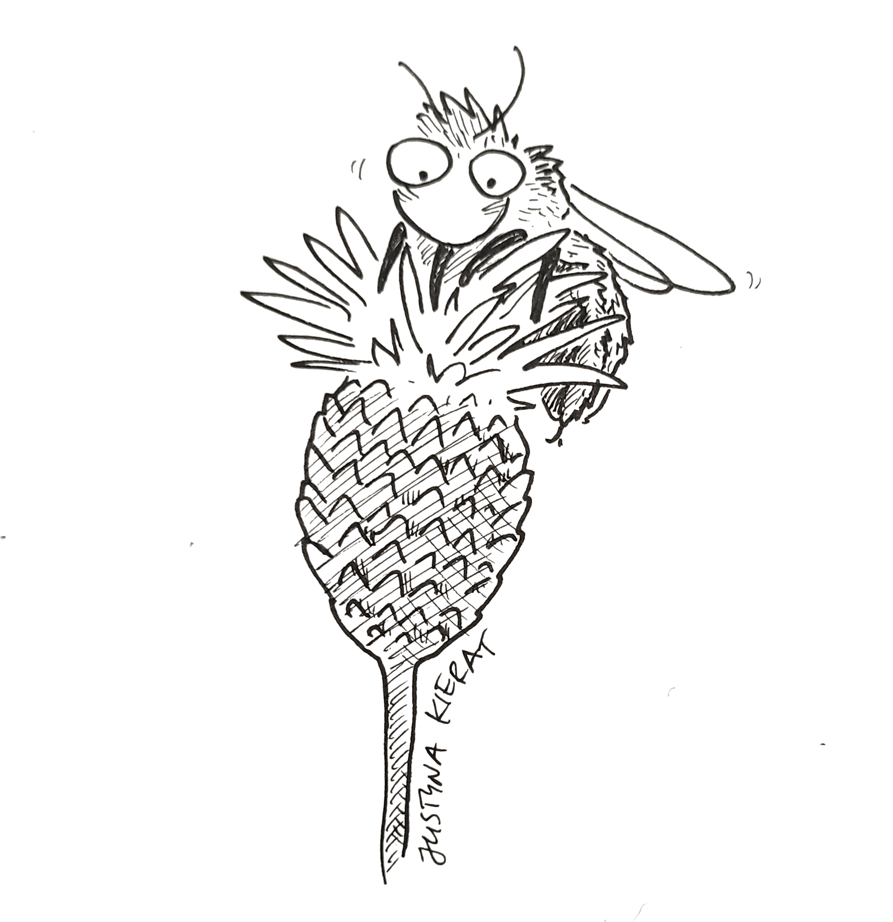
I recently ran a workshop for a group of schoolchildren. We talked about bees and drew them in a cartoon style. The kids had lots of questions, one of which really stuck in my mind. They wanted to know what colours bees could be. I was able to tell them that there are black, brown, red, white, yellow, orange, green and even blue bees. But what about pink? I can’t recall any pink bee species. Are there none, or I just don’t know them, or have forgotten about their existence? Please help me if you know the answer!
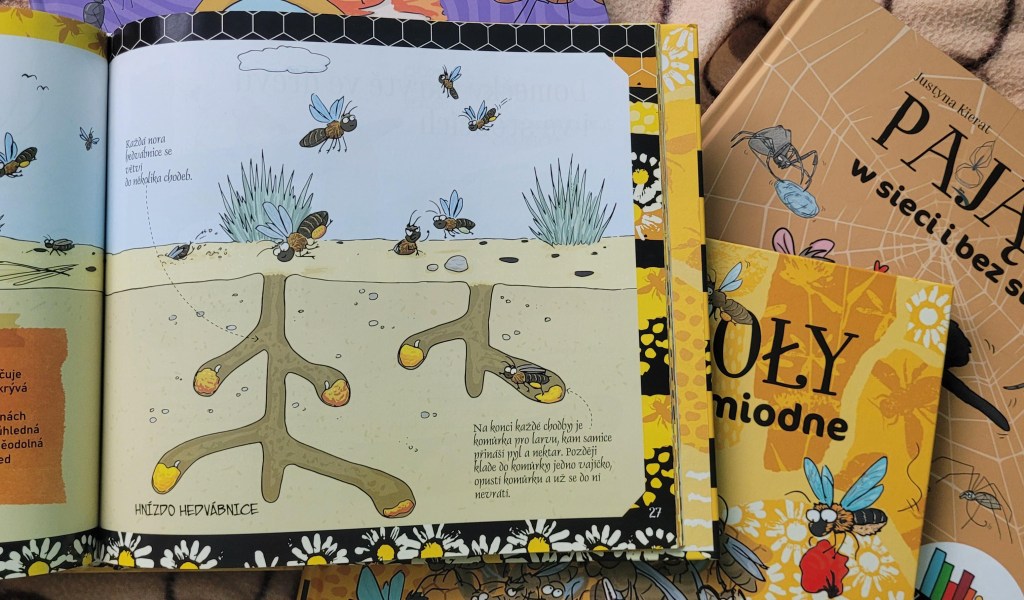
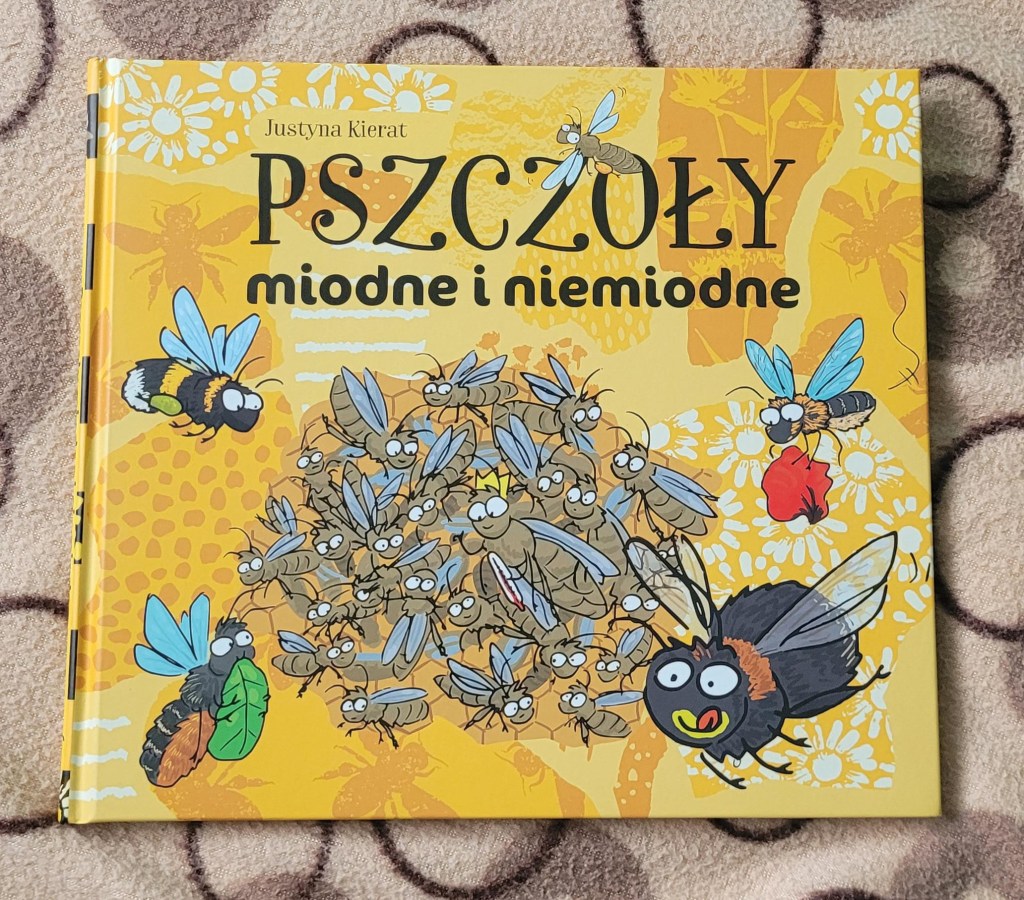
I’ve wanted to show you this for a long time. I’ve finally taken some good photos, so I can do it now. As you might know, I’m a biologist specialising in non-honey bees, an educator, and wildlife illustrator. The yellow books you can see in the photos are the result of combining these three things. The book is called “Honey- and Non-Honey Bees” (well, now you know where this page gets its name from:) ), and it presents the diversity of bee species and their lives. Although my cartoon drawings make it look like a children’s book, it’s not quite so – adults who are not yet familiar with bees can also enjoy it.
The book was originally published in Polish and was later translated into Czech and Slovak. I wish it could be published in more languages, but there’s not much I can do about that. However, if you know of any interested publishers, you can give them the contact details of the Polish publisher that owns the copyright to my book.
The violet and orange book are two more from the series that I wrote and illustrated: one about ants and another about spiders.
The honeybee is unimpressed. Their colonies can have about 50,000 workers. By comparison, bumblebee colonies range from several dozen to around 500 individuals. But this fanpage is about non-honeybees, so we don’t care about the honeybee’s opinion.
Today is my big day! Yesterday, I received Laurence Packer’s Beepedia. I plan to read it and then publish a review of it on my Polish-language blog about bees (I post there photos and longer texts in Polish, but if you would like to take a look, I hope the translator will be able to handle it). Before I had a chance to start reading the book, a friend wrote to tell me that he had found me inside (thank you, Robert!). I’m famous! That’s good motivation to post here more often.
And here’s the mention of me – in case you didn’t believe me! ๐
Anthophora bimaculata is one of the species with an exceptionally high-pitched tone produced during flight. I know only one other bee with that character – Bombus sylvarum, a bumblebee that has earned the common name “shrill carder bee”. Do you know other examples of bees buzzing like a mosquito?
Have you seen any of these videos where a bird (eg a kestrel or a kingfisher, or even a hen) keeps its head still when flying or sitting on a moving branch? Bees also have this kind of optic stabilization. When they fly, their thorax might rotate but head keeps being oriented horizontally. Here you can find an example of studies on this topic.
My association with this topic was remote control. Well, this kind of control might be not exactly remote, as it’s about a parasite controlling behaviour of its host. Apocephalus borealis, a fly, makes its bee host into a kind of zombie. It is known to parasitize bumblebees but a paper from 2012 reported it parasitising also the honeybee.
What bees grab when they’re hungry and busy? Mostly nectar. In general, the majority of bees feed on nectar and pollen, but the latter is consumed mainly by developing larvae, as it contains much protein and other substances essential for growth. Adults need mostly sugars to get energy for flying and doing everything they need to do. They consume pollen, too (females need it for producing eggs!) but in smaller quantities than their kids.
There could be only one bee today!… Well, one of over 800 bees, in fact. This is the number of members of the genus Nomada. These bees are cuckoos, their progeny develops in the nests of other bee species, for example mining bees (Andrena). I’m quite not sure where does the genus name come from. Is it because the bees don’t have their own ‘homes’, as they don’t build nests?
Surely you saw bumblebees with small brownish “dots” in their hair. You might think that they are varroa but they’re not. Varroa is a parasite which attacks presently only honeybees. Those bumblebee “dots” are mites, too, but they don’t suck their haemolymph or do any harm – in this life stage they are just hitchhiking to the bumblebee nest. Inside a bumblebee colony, they often are harmless or even beneficial, eating debris or hunting for harmful mite species. So, you don’t need to worry about a bumblebee carrying mites on her.
#inktober aka #beetober day 7, passport. Why not picture a bee which is crossing many country borders recently? Halictus scabiosae, a species expanding its range with impressive speed, according to some sources even 50 km/year.