Happy Valentine’s Day!
You love bees and want to do something for them? Dont be ‘that guy’. Don’t buy hives. Increasing the domesticated honeybee population doesn’t do any good for bees. In fact, it can harm both the wild species and honeybees.
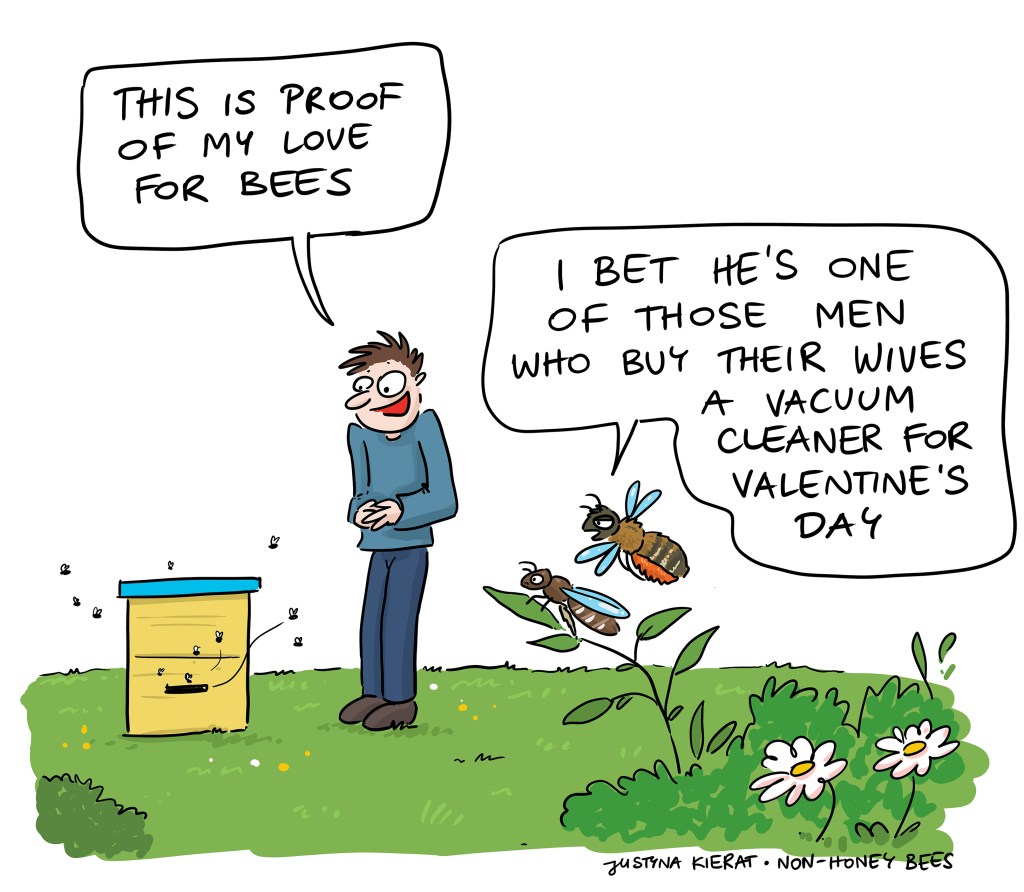
Happy Valentine’s Day!
You love bees and want to do something for them? Dont be ‘that guy’. Don’t buy hives. Increasing the domesticated honeybee population doesn’t do any good for bees. In fact, it can harm both the wild species and honeybees.
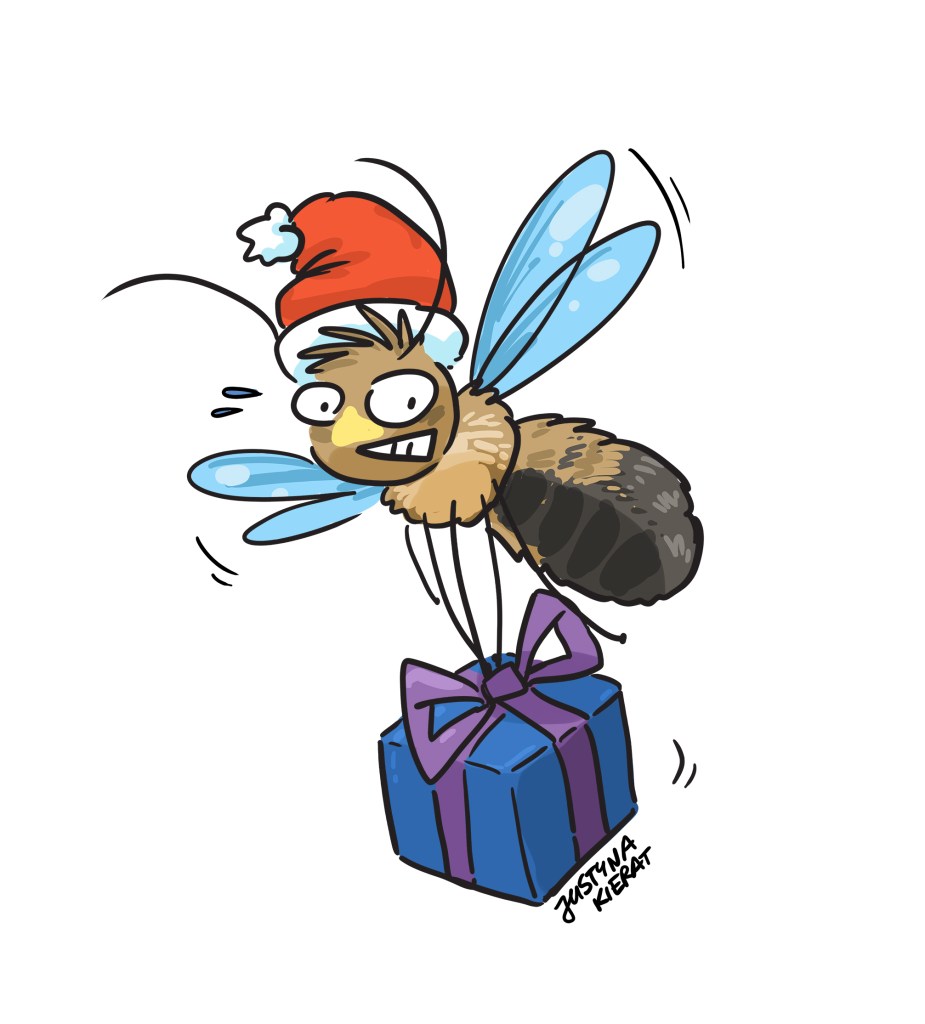
It’s quite early but I’d like to wish you merry Christmas and loads of bees in 2025!
The bee celebrating on my cartoon is Megalopta genalis – one of few bees well equipped to go to the New Year’s Eve party – it is active year-round (so, 31st December, too) and stays up late.

Don’t know what to buy for Christmas? Let the Australian bees help you!
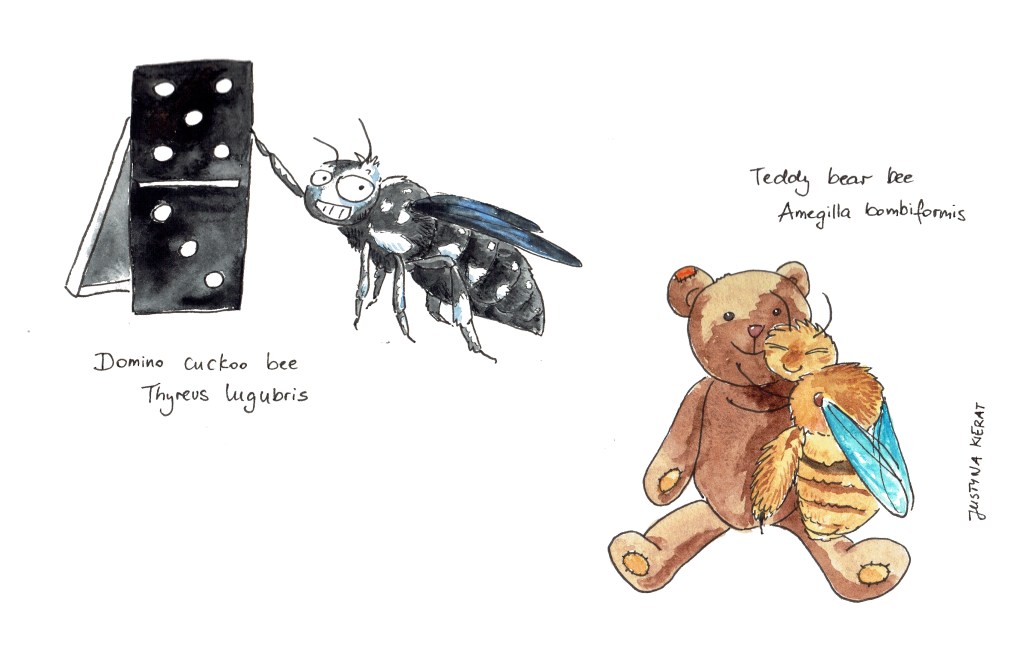
Yes, these are really common names of two bee species. And, believe it or not, the domino cuckoo bee is a brood parasite of the teddy bear bee!
One more Valentine cartoon! If you are not familiar with orchid strategies of fooling pollinators, look at my previous post where I wrote a few words about this.
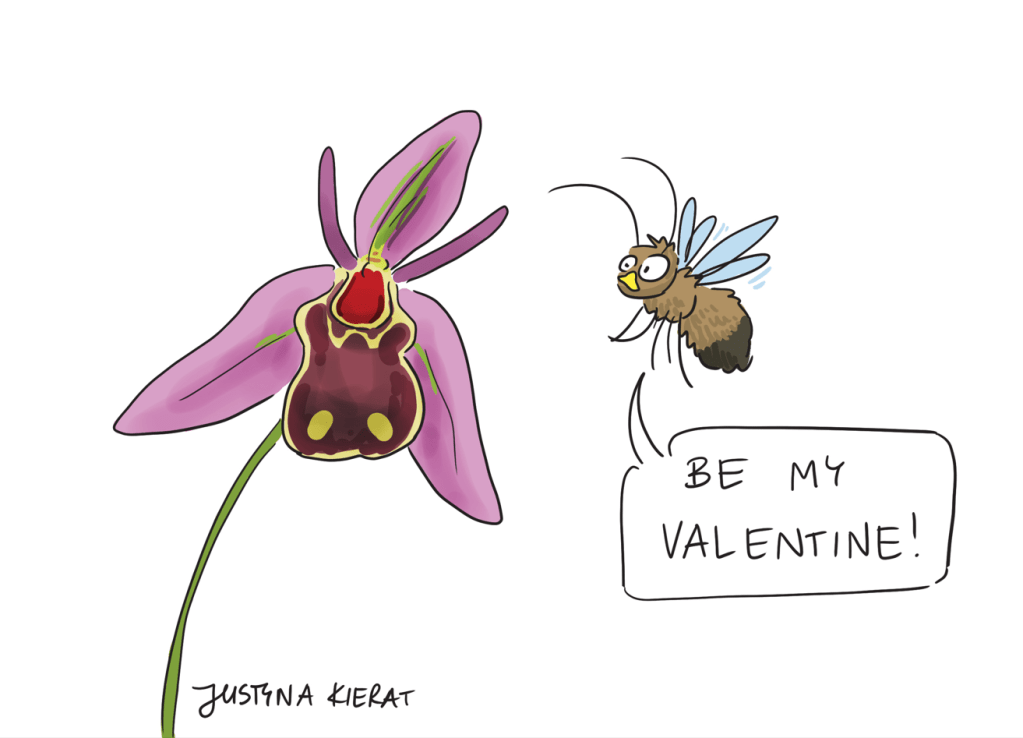
Today is a good day for a story about love. As you might know, some orchid species use males of bees or other insects as pollinators, making them think that their flowers are females ready to mate. They mimic pheromones of a given species, so the relationship is often very tight – there is only one insect species pollinating a given species of orchid. The plant has to be a real master of mimicry because the bee must be fooled more than once – only that way a transfer of pollen between individual flowers can occur. And it really is the case – it has been shown that for male Colletes cunicularius, a common European spring bee, that they prefer scent of the orchid, Ophrys exaltata, than of their own females!
If you want to read the original study about these Colletes males, here is the reference: Vereecken, N. J., & Schiestl, F. P. (2008). The evolution of imperfect floral mimicry. Proceedings of the National Academy of Sciences, 105(21), 7484-7488.

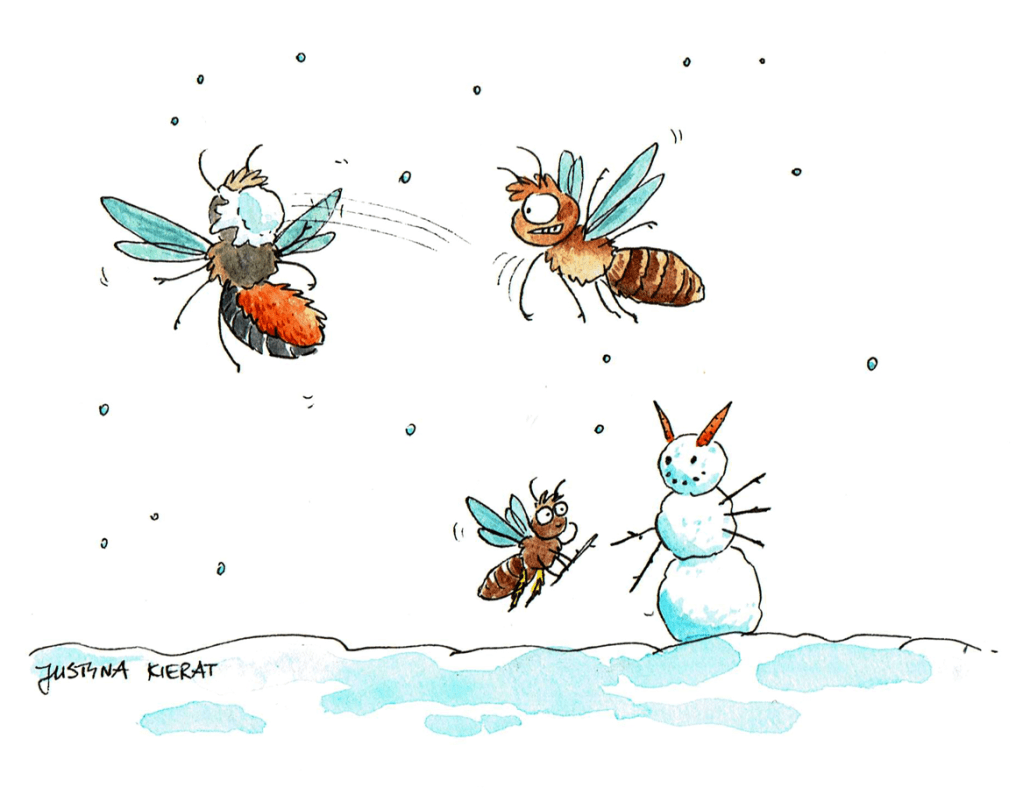
I wish you all the beest for Christmas, and may the New Year be full of joy and exciting wildlife observations!

 Non-honey bees