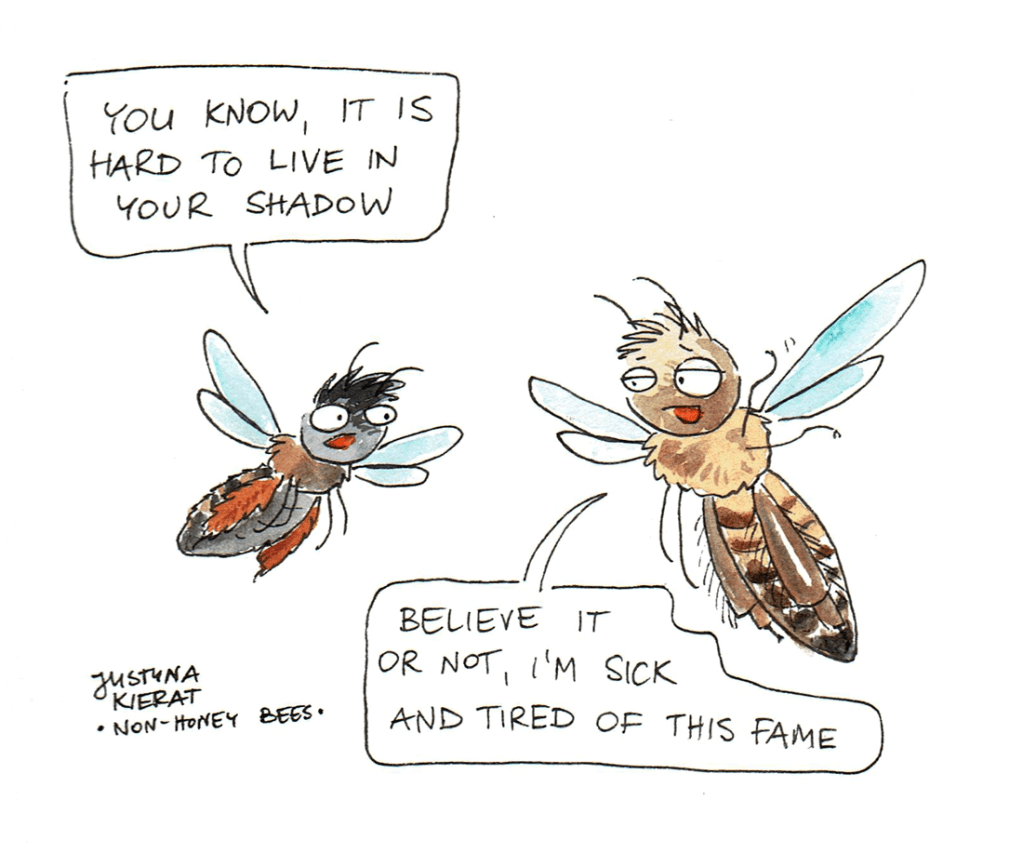
I just read an interesting study about the impact of apiaries on bumblebee colonies. It is one of quite a few studies exploring this topic. Honeybees, especially in high densities, can compete for food with wild bees. They can also transmit diseases and parasites to wild bee species. So, setting up an apiary is a potential threat for wild bees already living in the area. Despite that, beekeeping is often considered by the public to be a form of bee protection. It is a problem in bee conservation and we, bee-lovers, need to clarify this issue.
Returning to the study I mentioned. The researchers set up experimental bumblebee colonies in various distances from the apiary, and checked how this distance affects colony reproduction (production of workers and new queens), immunity of the individual bumblebees and risk of infestation of the colony by the bumblebee wax moth, Aphomia sociella. The bumblebee wax moth is native to Europe (where the research was conducted) and in natural conditions can invade bumblebee nests, feeding on wax, pollen or… bumblebee larvae. Nothing pleasant for the colony. It also can live in weak honeybee colonies.
What about the results? The nearer to the apiary, the more probable was infestation of the bumblebee nest by their wax moth. Worse still, the proximity of the apiary negatively affected immunity of bumblebees and their reproduction. The latter effects are explained by the authors by weakening of the colonies because of competition for food. All these effect can interact and strengthen each other – worse immunocompetence of bumblebees means higher risk of infestation with diseases, which is already increased by honeybees’ proximity.
What can we do with this knowledge? Surely not set up new apiaries “to help the bees”. Instead, we can provide food for all bees (honey- and non-honey-) in the form of flowering plants, preferably belonging to diverse native species. We can also protect habitats of wild bees, where they find food and nesting sites. We also can reduce pesticide use. And if we already have honeybees, let’s care for them as best we can, because healthy honeybees mean less risk of transmiting diseases to wild bee species.
How common is the knowledge that setting up apiaries doesn’t help bees, in your country? Is honeybee a native species where you live? Let me know 🙂





 Non-honey bees