Pathogen transmission between bee species is an important but still understudied field. Diseases and parasites have always been a normal part of bees’ lives but anthropogenic pressures affected these relationships. For example, undernourished bees are more prone to infections, so diminishing numbers and diversity of flowering plants may make pathogens more dangerous. Managed bees (mostly honeybees) can be a source of infection for wild species, increasing prevalence of native pathogens and being the source of new, alien ones.
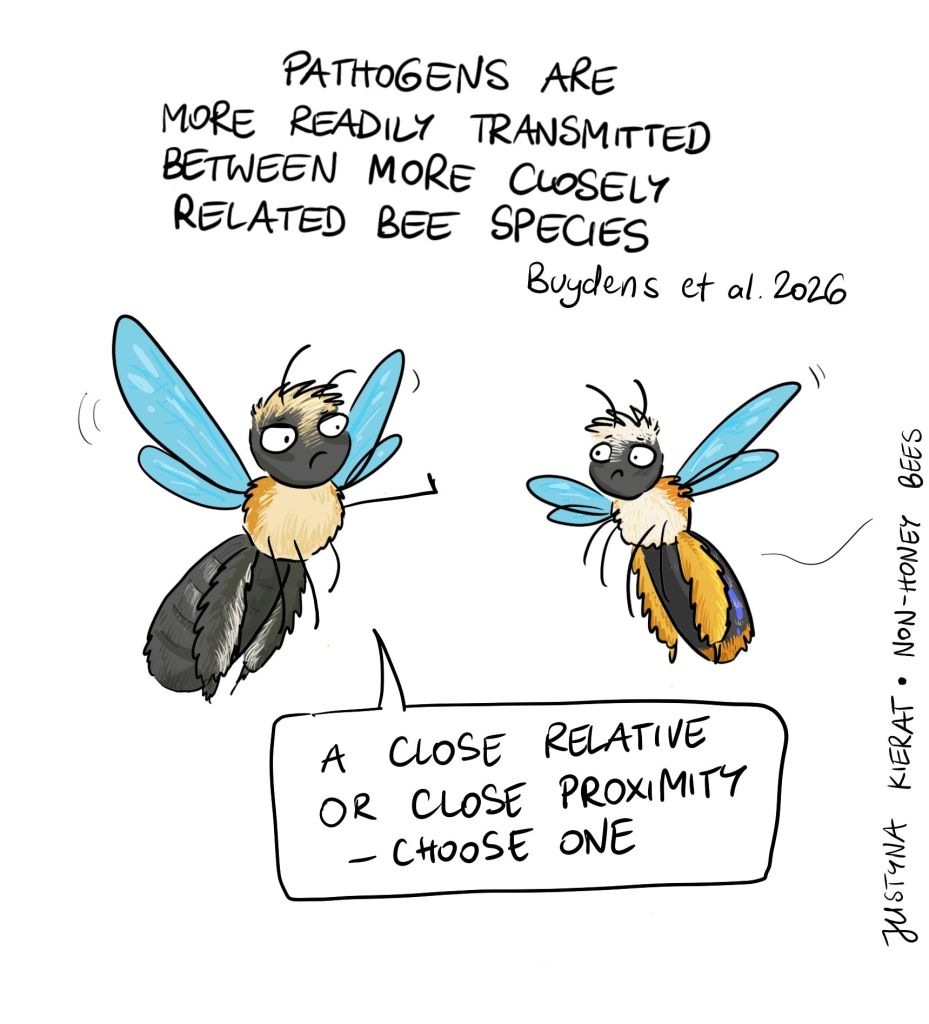
A new paper by Louella Buydens and colleagues (thank you for sharing, Louella!) examined the relationships between pathogen prevalence and plant sharing and taxonomic distance between bee species. They show that more related species are more likely to share their pathogens. Another, very important conclusion is that when there are low numbers of flowers, bees are forced to meet on them more often and pathogens are more likely to spread. Planting flowering plants (native ones are the best!) can reduce infections in bees’ population, both because it reduces the frequency of their interactions and makes bees better nourished.


Leave a Reply