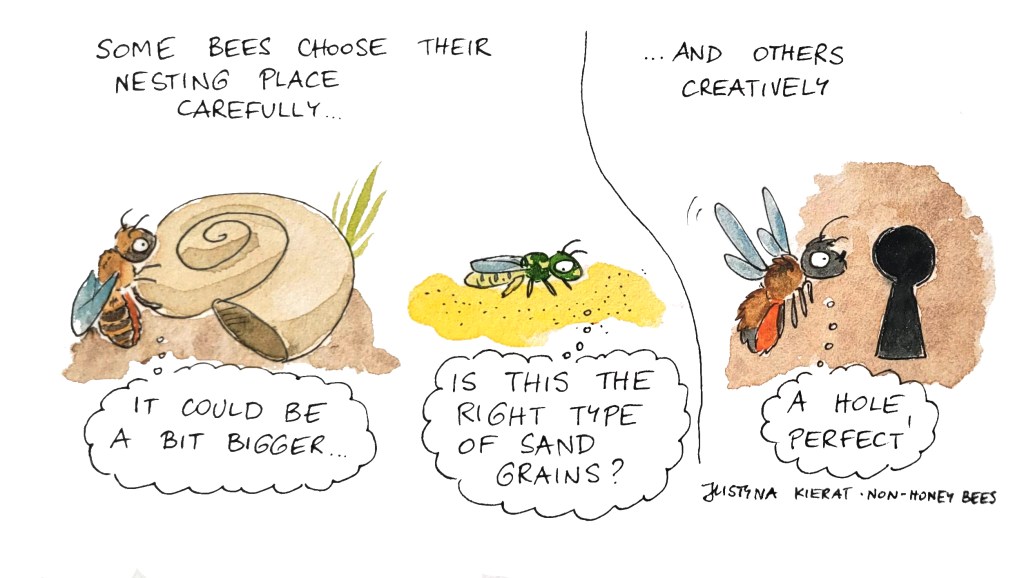
As you surely remember, there are over 20 000 bee species described by scientists so far. No wonder that among so many species, there is also a substantial diversity of nesting strategies. Most species nest in the soil, a smaller proportion chooses various cavities above ground, some make constructions from mud or resin. You can find a bee nest in a snail shell, plant gall or a termite mound.
The level of specialisation also differs between species – some bees are very choosy when it comes to nesting, others can be more flexible. The most creative species I know is the red mason bee (Osmia bicornis) – a common European species, which is often bred for pollination purposes. Females nest in pre-existing long and narrow cavities of about 4-8 mm in diameter – typically, hollow plant straws or holes in wood made by other insects. However, some females can nest in keyholes, nail holes, cracks in window frames, rolled-up carpets and a many other man-made cavities of various sizes. Once I saw a photo of a nest made in a bicycle wheel.
This post was published on Instagram in cooperation with The Pollinator Academy. I’m happy to be involved in this initiative. If you are interested to learn about European pollinator species, in particular bees, hoverflies and butterflies, and recognizing them, check out the PA website!
 Non-honey bees
Leave a comment